
[ad_1]
By HWM
A powerful cross-section of the art world gathered in New York City as El Museo del Barrio and Aspen Conexión convened a timely discussion on the growing influence of U.S. Latino artists.
Held on May 12 as part of Frieze New York’s “In the City” programming, the event brought together museum leaders, curators, collectors, artists, and policy voices to examine a market shift that is increasingly impossible to ignore.
Never miss new stories in Harlem
At the center of the conversation was a key question: how can the success of the Latin American art market be replicated—or even expanded—to elevate U.S.-based Latino artists? For many in attendance, the answer lies in greater institutional investment, visibility, and collaboration across sectors.
Patrick Charpenel, executive director of El Museo del Barrio, emphasized the urgency of the moment, pointing to a broader cultural shift where Latino creatives are no longer operating on the margins. Instead, they are shaping contemporary art and influencing global discourse. The conversation positioned U.S. Latino artists not as emerging voices, but as central players in a rapidly evolving creative economy.
That momentum is already visible beyond the art world. Cultural figures like Bad Bunny and Karol G were cited as examples of how Latino influence is driving global demand across industries. Panelists suggested that visual art is poised to follow a similar trajectory—if institutions, collectors, and investors act with intention.


Speakers including E. Carmen Ramos of the National Gallery of Art and Pilar Frank-O’Leary of Aspen Conexión highlighted the need for stronger infrastructure to support that growth. From museum acquisitions to auction house visibility, the conversation focused on how market signals—pricing, placement, and press—shape both perception and value.
Brooklyn-based artist Emilio Perez added a personal dimension, reflecting on the fluidity of identity and the challenge of being labeled within the art world. His perspective underscored a recurring theme: Latino artists are navigating both cultural specificity and universal appeal, often at the same time.
Participants also pointed to the role of major platforms like Sotheby’s and galleries in shaping collector behavior, noting that visibility in these spaces can directly influence market demand and long-term recognition.
Ultimately, the convening made one thing clear: the rise of U.S. Latino artists is not a passing trend—it is a structural shift. As institutions like El Museo del Barrio continue to create space for dialogue and investment, the next phase will depend on whether the broader art ecosystem is ready to meet the moment.
If the energy in the room was any indication, that shift is already underway.
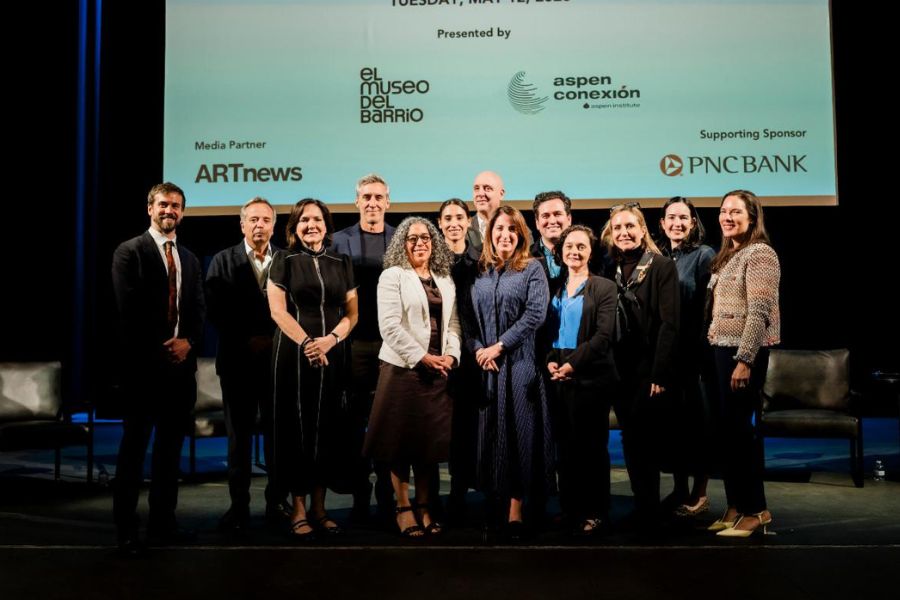
i From L-R: Diego Deleersnyder, Managing Director of Aspen Conexión; Diego Costa Peuser, Founder and Global Director, Pinta Group; Silvia Cubiñá, Executive Director and Chief Curator, The Bass Museum of Art; Emilio Perez, Brooklyn-based Artist; E. Carmen Ramos, Chief Curatorial and Conservation Officer, National Gallery of Art; Irene Gelfman, Global Curator, Pinta Group; Patrick Charpenel, Executive Director, El Museo del Barrio; Patricia Hanna, Director, Jorge M. Pérez Collection / El Espacio 23; Maximilíano Durón, Senior Editor, ARTnews; Susanna V. Temkin, Interim Chief Curator, El Museo del Barrio; Pilar Frank-O’Leary, Executive Director, Aspen Conexión; Karla Harwich, Board Chair, El Museo del Barrio; and Danielle Baussan, Vice President for Policy Programs and Director of the Arts Program, Aspen Institute
Latest Post:
Become a Harlem Insider!
From history to today’s headlines—everything Harlem, in your inbox.
By signing up, you’re agreeing to receive communications from Harlem World Magazine and our Privay Policy.
[ad_2]
Source link