
[ad_1]
Visual artist discusses identity, women, technology, and her upcoming artistic project in an exclusive interview with Kurdistan24
ERBIL (Kurdistan24) — Kurdish painter Kizhan Khasraw says modern art has become a universal language of freedom and emotional expression, as she continues to explore new artistic techniques and deeper social themes in her work.
In an exclusive interview with Kurdistan24 on Saturday, Khasraw reflected on her artistic journey, her evolving creative philosophy, and her latest project, describing art as an inseparable part of her identity.
“Modern art is the ultimate freedom of the artist,” she said. “It is a space where people can discover themselves without limits, fear, or restrictions imposed by traditional frameworks.”
Born in 1999 in Sulaimani, Khasraw graduated from the Graphic Design Department at the College of Fine Arts at the University of Sulaimani. She has participated in numerous art exhibitions in Erbil and Sulaimani and remains active in the Kurdish art scene.
Khasraw said her relationship with art began long before her academic studies and has accompanied her since childhood.
“Art grew inside me from an early age,” she said. “If art were taken away from me one day, I would no longer remain the same person, because my existence is tied to creativity and color.”
The artist emphasized that freedom in style and experimentation distinguishes her work from others. She said she refuses to confine herself to a single artistic school, instead treating each painting as a translation of dreams and emotions.
While she works across both classical and modern approaches, Khasraw explained that her personal projects increasingly move toward modern, collage, and abstract art forms, allowing her artistic identity to emerge more clearly.
She noted that oil paint remains her preferred medium because it gives her time and precision while working. However, she also experiments with acrylic paint and palette knives when faster drying techniques are needed.
According to Khasraw, successful painting is not simply about technical beauty.
“A successful painter is not only someone who creates beautiful artwork,” she said. “An artist must possess skill and mastery of technique, a distinct identity that differentiates their work, and the ability to convey feelings and messages that viewers can sense beyond the colors and forms.”
Khasraw believes modern art has become increasingly popular because audiences are gravitating toward simplicity and modern aesthetics in their everyday lives.
“People today want paintings to become a living part of their daily environment,” she said.
Much of her earlier work focused on women and their inner worlds, using color to express sorrow, hope, and the emotional struggles they experience. However, she said her artistic vision has since expanded toward broader human and social themes.
“I want art not only to represent beauty,” she explained, “but also to become a language for expressing pain, hope, and human longing.”
Discussing the influence of technology and artificial intelligence on the visual arts, Khasraw acknowledged both concerns and opportunities emerging from digital tools.
“Technology can sometimes reduce the value of handmade art, and some artists rely heavily on digital programs,” she said. “But I also believe artificial intelligence has opened a major new door for art.”
She added that AI can help artists save time and explore countless artistic styles and historical references instantly, arguing that when used correctly, it should serve as a supportive tool rather than a replacement for artistic creativity.
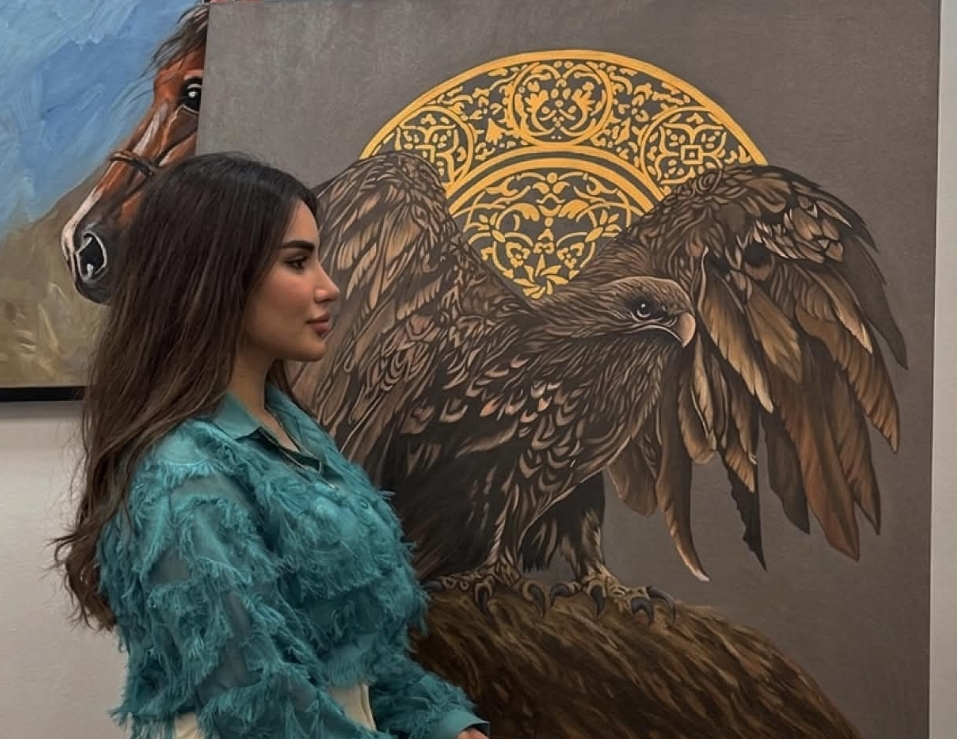
Over recent years, Khasraw has participated in several notable exhibitions, including “Zhêr Zemin” in Sulaymaniyah, where she exhibited collage works exploring women’s emotions and experiences alongside other artists.
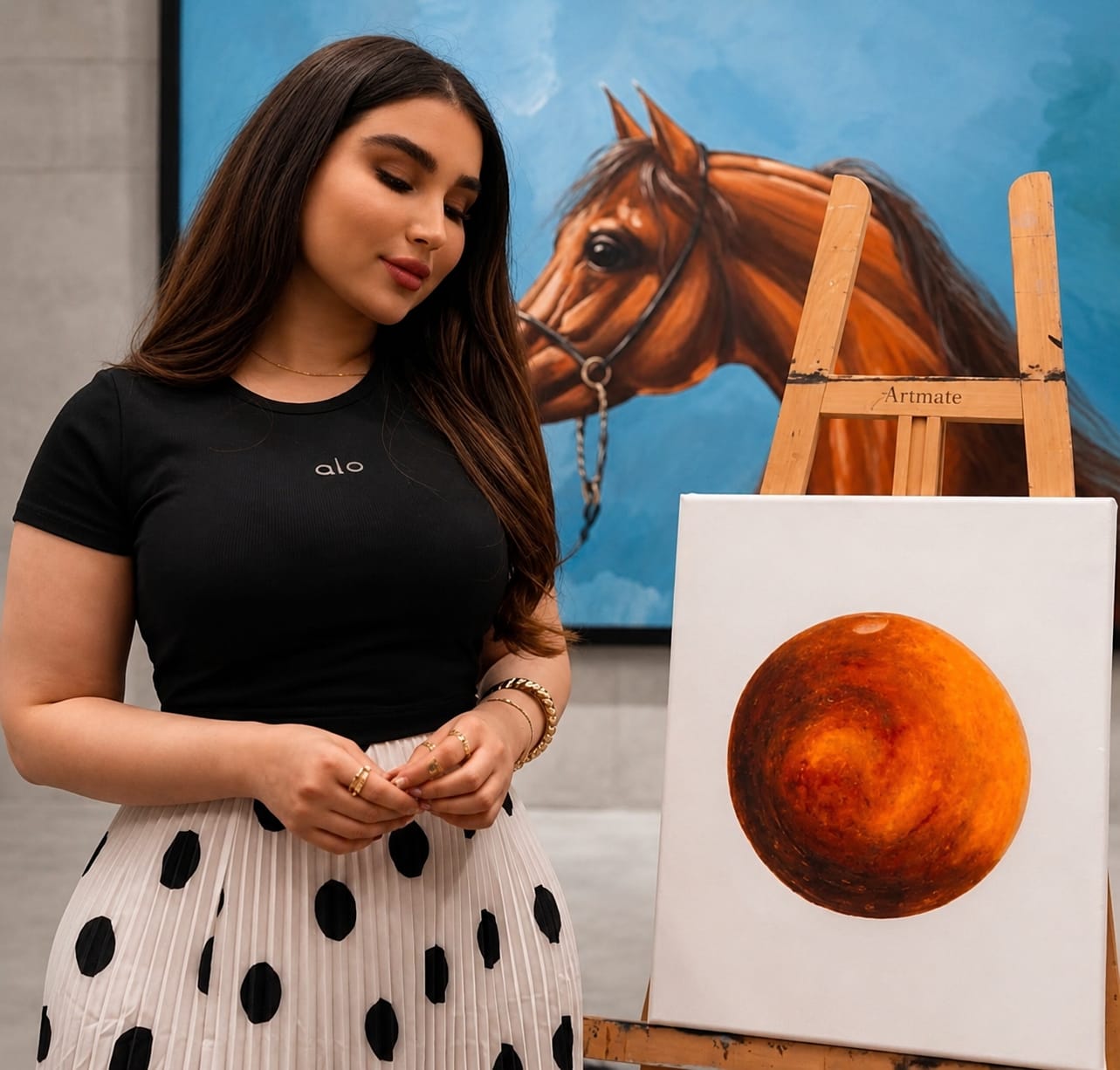
She also participated in the exhibition “Hawarekani Zhêr Khak,” where she used acrylic techniques to depict women whose silence had become part of history. In Erbil, she contributed to the exhibition “Zin,” which focused on the beauty and authenticity of horses.
Khasraw described herself as an artist constantly searching for new ideas and techniques.
“I see art as an endless ocean,” she said. “An artist never reaches a point where they can say they have learned everything.”
She said the core message behind her work is renewal, continuity, and the belief that art has no boundaries.
Through her paintings, she hopes to show that people can create a more beautiful world for themselves and those around them through simplicity, imagination, and authenticity.
Speaking about her upcoming project, Khasraw said it will focus on deep social and psychological themes shaped by contemporary human pressures and emotional struggles.
She said the project reflects humanity’s attempt to preserve freedom and authenticity amid external pressures and constant scrutiny.
“An artist is, by nature, a free being always searching for beauty and truth in life,” she said. “I try to protect my artistic world from anything that could distort the spirit of my paintings.”
[ad_2]
Source link