[ad_1]
Running from May 2 to October 4, 2026, the exhibition will span seven decades of the Lithuanian American artist’s career.
Kasuba, who lived from 1923 to 2019, is known for her early paintings and mosaics, as well as her later sculptures and public artworks, including innovative spatial environments.
Her work often drew inspiration from nature, and she sought to forge a deeper connection between humanity and the natural world.
She collaborated with the Experiments in Art and Technology (EAT) group in the late 1960s, alongside artists, engineers, and scientists.
In 1944, due to the Soviet Union and Nazi Germany’s successive occupations, Kasuba fled Lithuania.
After living in a displaced persons camp in Germany, she emigrated to America in 1947, initially settling in New York before moving to New Mexico later in life.
During her time in New York, she designed large-scale mosaics and murals in brick, marble, and granite for public buildings.
Her works included a pavement at the Old Post Office Plaza on Pennsylvania Avenue in Washington D.C., the mosaic at the Container Corp Headquarters in Chicago, a relief at Lexington Avenue in New York, and a 4,000 square feet wall in etched granite at the World Trade Centre, which was destroyed in the 9/11 terrorist attacks.
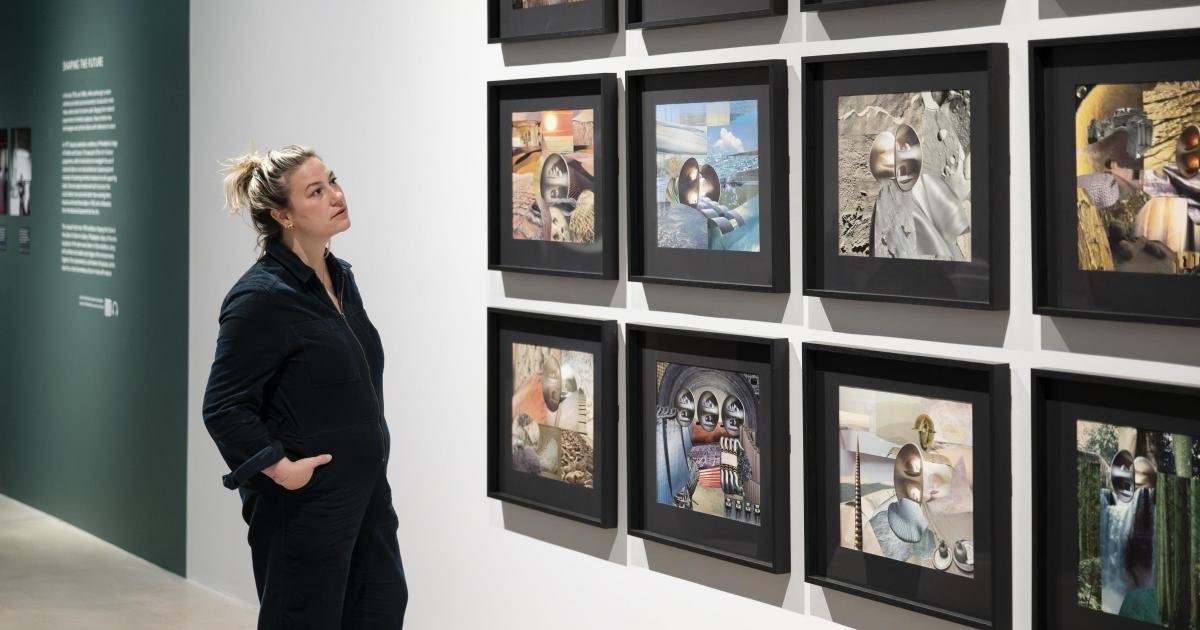
The exhibition at Tate St Ives will feature a range of Kasuba’s sculptures, models, mosaics, paintings, drawings, and collages from the Lithuanian National Museum of Art’s collection, where the artist donated her works.
Spectrum: An Afterthought, a significant spatial environment, will be displayed in its entirety.
The work is a passageway with brightly lit, differently coloured zones, made of aluminium, neon, plastic, plywood, steel, and tensile fabric.
The exhibition will also feature the Three-dimensional Rug, designed and made by Urban Jupena in 1971.
Part of Kasuba’s Live-In Environment will be recreated as it was in her New York apartment.
Kasuba’s later projects included her home, Rock Hill House, which she designed and built in the New Mexico desert in 2001.
[ad_2]
Source link