[ad_1]
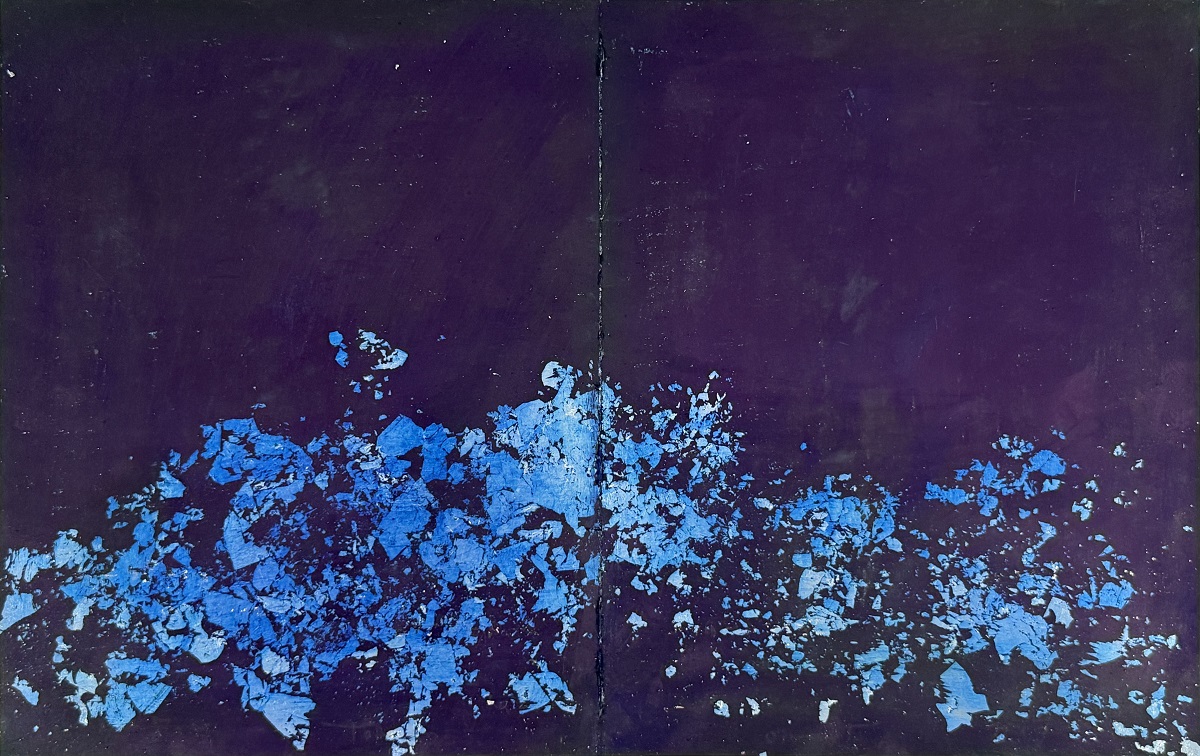 Ben Woolfitt, Ecstasy in Blue, Silver leaf, metal leaf, oil pastel, dry pigment, and graphite on paper, September 3, 2025. Courtesy of Kristy Stubbs Gallery.
BY SIBA KUMAR DAS, May 18th, 2026
“I’ve been frustrated by contemporary art and all these over-hyped artists, but Ben’s work is real.” So said a collector upon seeing Morning Light at Kristy Stubbs Gallery. The collector’s response is not a surprise. Ben Woolfitt’s art evokes feelings of transcendence in the viewer, and a profound authenticity pervades his drawings and paintings.
Heretofore, most of us have thought of Woolfitt’s paintings and drawings as coequal, parallel branches of his artistic practice. The five paintings and 19 drawings on view at Morning Light tell us they are parts of a single whole.
This unity has been increasingly evident in recent years. The solo exhibition in Dallas, TX, builds on three recent shows: an Art Gallery of Ontario exhibition of Woolfitt’s drawings[i], and exhibitions of paintings and drawings at New York’s David Richard Gallery and Toronto’s Loch Gallery. All three shows affirmed a growing convergence between the two branches. But Morning Light has especially brought to the fore the connectivity between Woolfitt’s drawings and paintings.
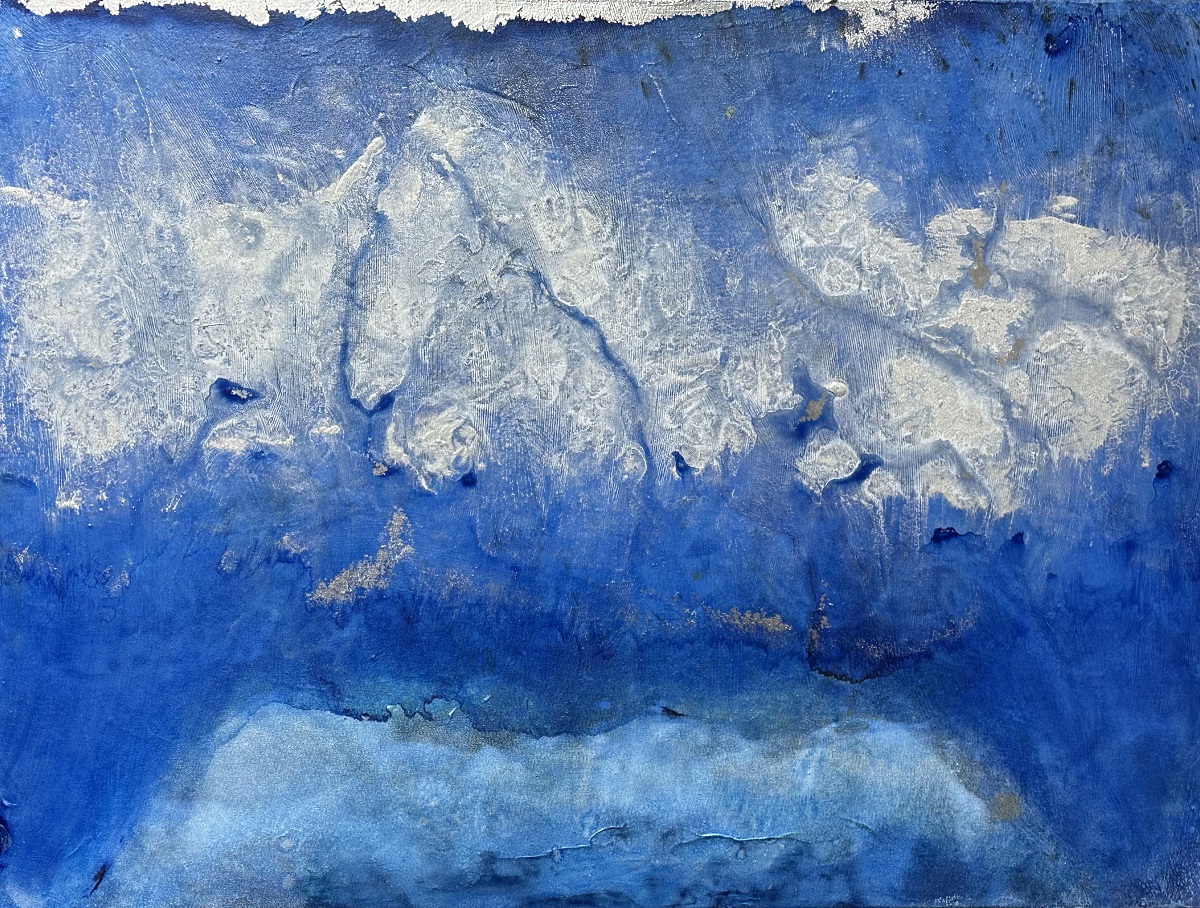 Ben Woolfitt, Radiant Edge, 2025, Acrylic on Canvas, 30 x 40 in. (76.2 x 101.6 cm.) Courtesy Kristy Stubbs Gallery
Joan Mitchell famously said, “I carry my landscapes around with me.” In similar vein, we might say that Woolfitt carries his dream-triggered drawings around with him. He draws first thing every morning, employing frottage to mine dream memories from his night before and spontaneously develop images on graphite-darkened white paper. He uses graphite also to draw, combining it with dry pigment, oil pastels, silver leaf, and metal leaf. At the end he often inserts jotted-down words expressing thoughts or feelings such that you might think of the drawing as a haiku. In utilizing silver leaf, he anticipates the slow color change that will inevitably follow from oxidization, bringing into play resonances suggestive of ephemerality, impermanence, and the passage of time, an allusiveness that also makes you think of Japanese aesthetic ideas, especially mono no aware (the pathos of things). Donald Kuspit, famed for his psychoanalytic art criticism, says in a 2019 monograph on Woolfitt’s drawings that when Woolfitt draws every morning he is undoing through “the dream space of his drawings” the damage done to him in his childhood. He is not only aestheticizing his dream images; he is transcending them. And it is indeed this incarnate transcendence that Woolfitt carries around with him, transmuting it into the wellspring from which his paintings emerge.
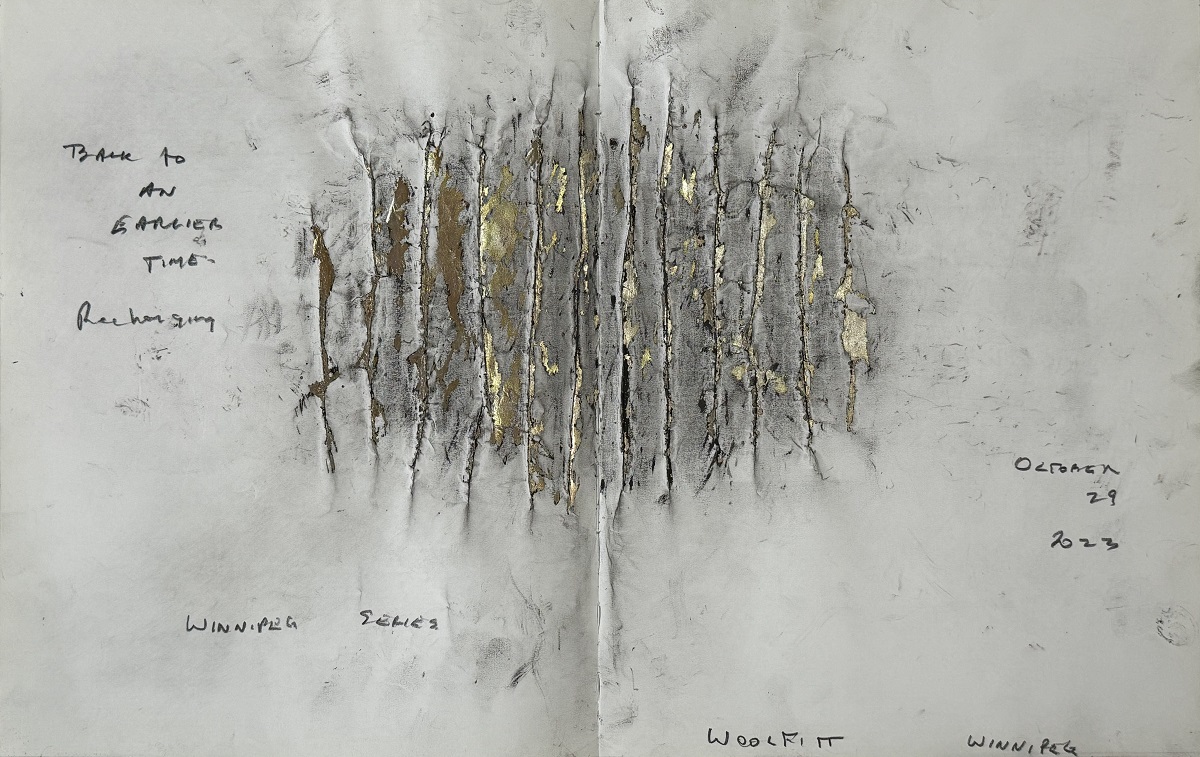 Ben Woolfitt, Back to an Earlier Time, silver leaf, metal leaf, oil pastel, dry pigment, and graphite on paper, October 29, 2023. Courtesy of Kristy Stubbs Gallery.
Kristy Stubbs Gallery has located “Mystic Water I” and “Mystic Water III” in the open air in a gateway to the exhibition space. The ambient light enhances the paintings and highlights their riches, an effect that changes as the light from the sun changes with the day’s passage, this itself a semiotic suggestion. The subtle interplay that Woolfitt achieves within each painting between its greys and blues, the latter more dominant in “Mystic Water III” than in “Mystic Water I”, induces slow looking, and the longer you look, the more you are absorbed by the forms emerging from his virtuosity with color and the sense of tangible physicality that he creates on his surfaces. In addition to the interplay between his greys and blues, note the silver-grey hues and granulated textures of the north-west corner of one painting and north-east corner of the other, both clues to the emergent genesis mentioned above.
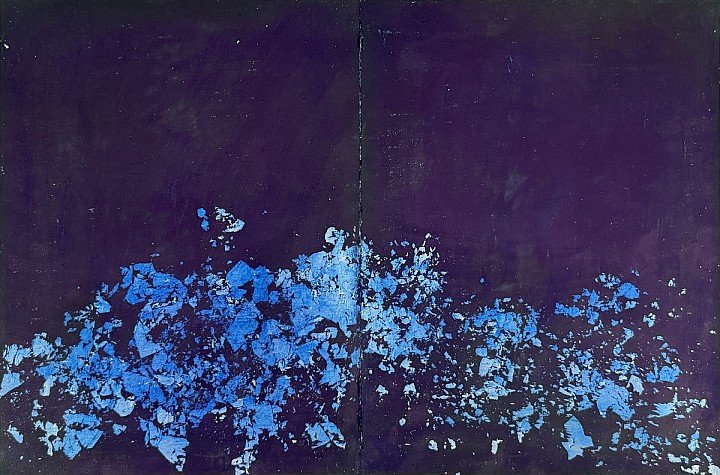
Within the main exhibition space, installed on a white wall positioned at a right angle to a mirrored artwork[ii] that is not part of “Morning Light” are two drawings that are worth a deep look. Let’s view “ecstasy in blue” and “misty rain”, both drawn in 2025. The two drawings have been positioned side by side, “ecstasy in blue” to the left. Both are exceptionally beautiful, but “ecstasy in blue” is notable for its focus on blue. Woolfitt creates an expanse of very deep blue by placing a blue-purple layer on top of a black layer, and then offsetting it by incorporating in the drawing’s lower half scintillating blue shards that range from cobalt and Prussian blue to Egyptian blue and cerulean. But beauty comes in all shapes and colors, as is evident in the second drawing, in which a ‘misty rain’ seems to metaphorically spread over a topography that has three parts: a grey-silver landmass fractured by cobalt blue cleavages, an ultramarine sea streaked by copper-colored lines and incisions, and a black mountain-like mass that may also resemble a body of water. The grey-silver mass shimmers in ambient light so strikingly it seems to vibrate that light, gripping your attention in a magnetic way. This is physicality in memorable action on a two-dimensional surface.
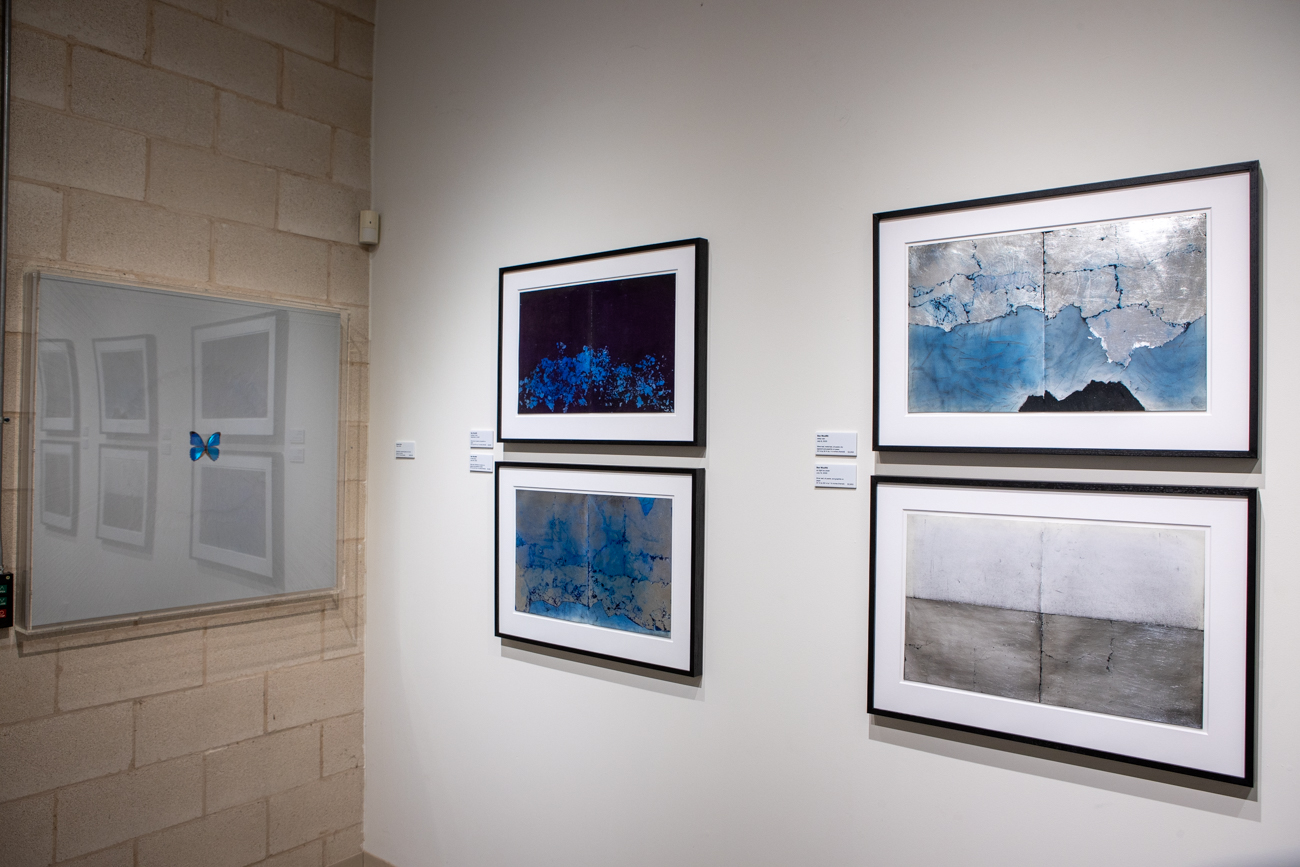 Installation photo, four drawings on white wall, top left, ecstasy in blue, 2025; top right misty rain, 2025. Courtesy of Kelly Stubbs Gallery
To see a drawing that embodies the pathos of things (mono no aware) even as it achieves transcendence and beauty, let’s view “back to an earlier time,” which Woolfitt made on October 29, 2023. It’s part of a group of drawings, the “Winnipeg Series,” in which he was engaged for a while. It includes a jotting that references the picture’s title and also suggests that he is recharging himself after a painful experience. But what is it that Woolfitt is recalling from the earlier time? The image in the drawing’s middle seems to evoke a grove of trees or a forest where something to fear or dread may be lurking. But why are the trees glowing with a strange luminosity? The drawing gives no answer. Think: it is an enigmatic sublimation that Woolfitt conjures, his chief instrument his technical virtuosity, especially the way he persuades his oil pastels to throw off the impression that the drawing is lit from within.
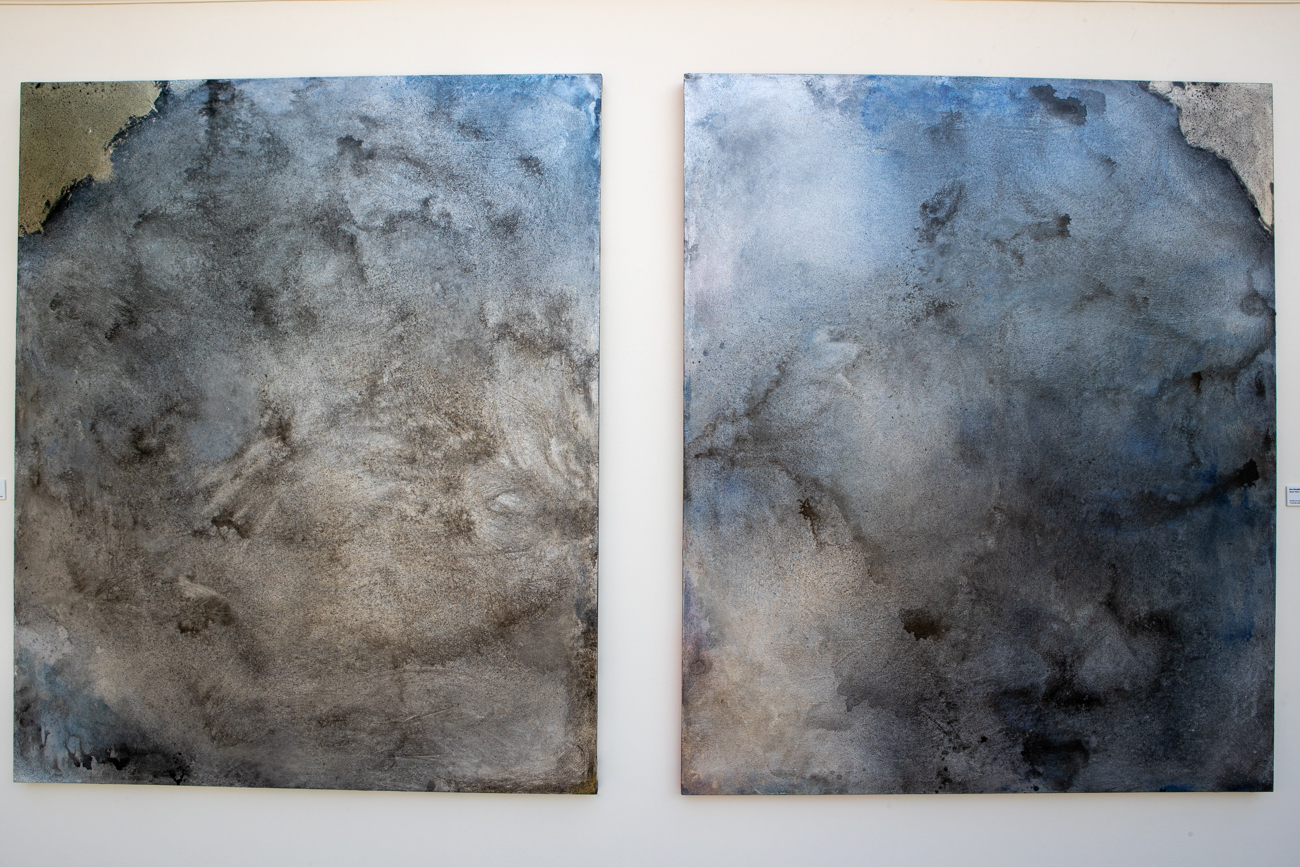 Installation Photo, Mystic Water I & Mystic Water III, Each 72 x 60 in., 2025, Acrylic on Canvas, Courtesy Kristy Stubbs Gallery
To do justice to the paintings showcased in Morning Light, let’s turn to “Radiant Edge”, which is a standout example of Woolfitt’s expansion of blue’s possibilities. To create a deep, more resonant blue that also expands its lateral range, he juxtaposes it with white, silver, and gold—the latter two subtly and unobtrusively. In the painting’s top half, white in fact is dominant, its salience aided by a brushy texture. But, note how the fractured white mass situated here also leads your eye to the sheer beauty of the cerulean blue region lying above it. South of the mass, the blue becomes translucent and ever more fluid even as it darkens, growing its emotional charge. It is in this region that the interplay with gold and silver is most evident. It is also here that Woolfitt applies with great skill the wisdom he has taken from color field painting. The subterranean white mass that occupies the southernmost part of the painting is overlaid by a film of blue, but there is yet another filmy layer that is at once faintly silvery and golden. See also how Woolfitt’s oceanic dark blue surrounds his sunken Antarctica. “Radiant Energy” is a complex painting. As you keep pondering its myriad significations, you might think of J.M.W. Turner and Jules Olitsky, both heroes of Woolfitt.
There was a time when Woolfitt’s paintings seemed to be volcanic and turbulent. The five paintings on view at Morning Light express a palpable physicality, but they also ask you to view them slowly and contemplatively. Though not monochromatic, they privilege the color blue. In his book On Being Blue: A Philosophical Inquiry,” William H Gass[iii] called blue “the color of interior life.” He also said, “Because blue contracts, retreats, it is the color of transcendence, leading us away in pursuit of the infinite.” Woofitt’s drawings have always been the creations of his inner life and a search for transcendence. They have also served as his paintings’ wellspring. Both his paintings and drawings are now drawing together even more. Johannes Itten said, “Each individual color is a universe in itself.” Woolfitt’s art, built upon the enigmatic interiority of his drawings, becomes in his recent paintings a radiant blue universe.
[i] The AGO show also presented four drawing books and one painting.
[ii] The art work features a blue butterfly positioned on a mirror. The artist is Damien Hirst.
[iii] On Being Blue was first published by D.R. Godine, Boston, in 1975. It was republished by The New York Review of Books, New York, NY, as a NYRB Classic in 2014 with an Introduction by Michael Gorra.
[ad_2]
Source link