[ad_1]
The River Arts District’s revival continues with more artists, businesses returning after Tropical Storm Helene.
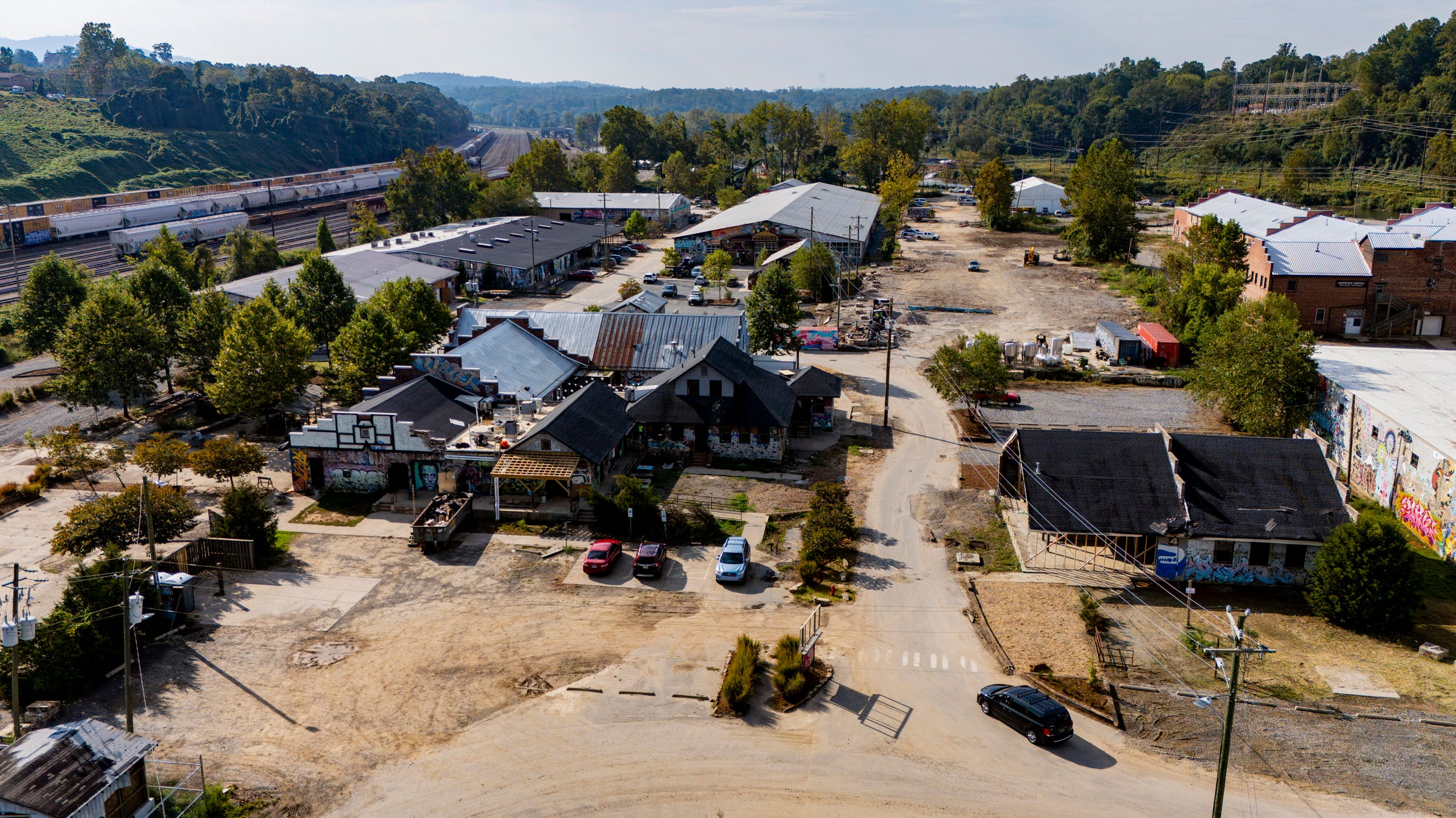

River Arts District rebuilding one year after Helene | Drone view
Drone footage captures Asheville’s River Arts District one year after Helene, showing ongoing storm damage alongside efforts to restore the arts hub.
- Tropical Storm Helene caused record-breaking floods in September 2024, devastating Asheville’s River Arts District.
- Artists lost their studios, artwork, and materials to the floodwaters and toxic mud.
- A year and a half later, several artists have collaborated to open new galleries in the renovated Asheville Cotton Mill Studios.
- Financial recovery remains a challenge for artists, who face hurdles such as pending insurance claims and higher rents.
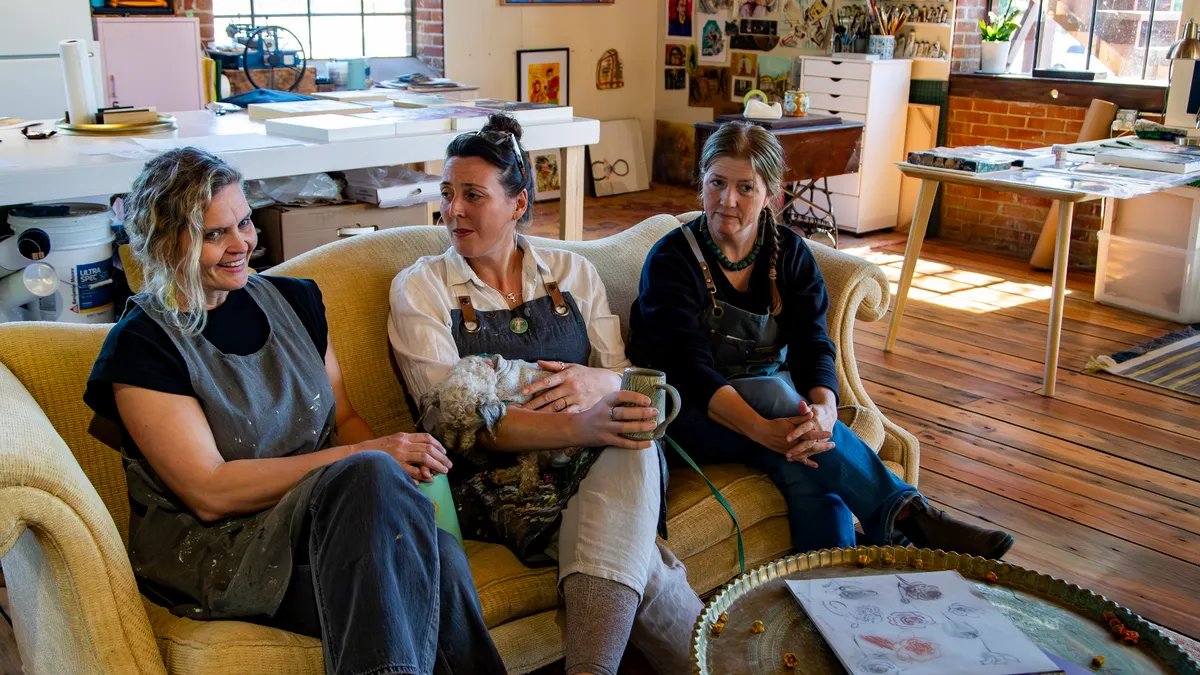
ASHEVILLE – On May 14, artists Elizabeth Porritt Carrington and Kelcey Loomer sat in their new sunlit River Arts District gallery and studio, recalling climbing over the wreckage of a dislodged roof ripped off Pleb Urban Winery to access a window to enter what was left of their Riverview Station studios following Tropical Storm Helene.
On Sept. 27, 2024, the historic, catastrophic storm arrived, following a precursor heavy rainfall event, causing the French Broad River to rise to a record-breaking 24.67 feet. Once the floodwaters receded, the artists returned to their neighboring River Arts District studios, finding their life’s work washed away or caked in toxic sludge, and deciding how to move forward.
“One of my studios had four steps down, so it was like a small swimming pool in there,” Carrington said. “We were climbing over roofs and trying to get onto the fire escape to get in there. It was crazy.”
Before Helene, they had assisted first-floor artists move their belongings to the higher ground of their second-floor suites, never imagining the river waters would rise so far past their banks and so high as to reach.
Likewise, Amanda McLenon, a wildlife oil painter, didn’t initially consider the floodwaters breaching Depot Street in the upper River Arts District, where she worked from Pink Dog Creative, but was encouraged by her partner, studio-painter and muralist Jonathan Bidwell, to move as many of her items from the gallery as possible, after noticing that the storm ahead of Helene’s arrival wasn’t letting up.
“It had water come in from the hillside, and it was closed for a long time. I lost a lot of materials and ended up leaving the space because of mold,” McLenon said.
A year and a half later, the visual artists have collaborated to open new galleries and studios in the historic Asheville Cotton Mill Studios, which was renovated after also being submerged by floodwaters up to the second floor. It is less than a mile from the Riverview Station, which remains closed, but was sold to new owners who plan to rebuild and bring artists back to the building.
This spring, Asheville Fine Art Gallery and Ochre Rose Gallery and Working Studios, at 122 Riverside Drive, Suites 13 and 24, opened, offering visitors a chance to see the painters at work, view and purchase completed pieces, join workshops, and hang out with the creators while discussing their processes and collections.
McLenon and Bidwell operate the Asheville Fine Art Gallery. McLenon is also a part of the Ochre Rose trio, along with Carrington and Loomer.
“It was a hibernation to get back to that creative voice, and there has been a lot of soul searching about, ‘Is art important? Do I keep painting after such a big disaster?’” McLenon said. “A lot of us circle back to, ‘This is what I do. This is how I contribute to society. This is the way I can reflect what’s beautiful in the world.”
Rebuilding in the River Arts District after tragedy
The newly acquired spaces, formerly home to the Asheville Guitar Bar, which closed due to Helene, also serve as a new beginning and beacon of hope for the artists and the broader local arts community.
“This feels like such a huge step in the right direction. It’s such a celebration. We can open our doors again, welcome people in again, and have all those interesting conversations with people ― visitors, locals and others in the arts community,” said Carrington said, who had worked in RAD for 14 years. She found a temporary studio and gallery space at the nearby Phil Mechanic Studios before finding a permanent home at Cotton Mill Studios.
The long recovery has required inner gumption, a strong support system and monetary investments, which have proved challenging after the unexpected financial setback of losing everything.
Due to Helene, revenue and inventory were lost, along with the materials and space to restock and relaunch their businesses after the long cleanup process.
Insurance claims are still pending.
The artists reported receiving emergency and other Helene-related grants and resources from local entities, including from ArtsAVL, the designated arts agency for Buncombe County and a regional advocate for Western North Carolina’s creative sector, and the River Arts District Artists (RADA) Foundation, made up of arts community members, that helped make ends meet. Though the short-term and long-term recovery grants could only take artists so far, given other large expenses like leasing new retail and workspaces.
“Artists need more assistance. The deposit and the build-out here to make this into a gallery were pretty significant, and a lot of artists are facing that kind of hurdle,” Loomer said.
Loomer said that her deep love for RAD and the arts community brought her back, but only to find higher rent costs than before Helene.
The artists have also been receiving residual checks from the sale of “The Flood Collection,” a 120-page coffee-table book and a 54-card playing card deck featuring original works of art lost or damaged during Helene, as well as the artists’ stories. Compiled by RAD artist Erica Schaffel, proceeds are split equally among the featured artists.
“You have to jump to keep moving and working. This is how you make a living. There’s also this real grief and loss,” Carrington said.
A re-found home, community in RAD
McLenon said she briefly considered opening her gallery in other areas of town, but ultimately found her way back to RAD.
“I had to do soul-searching about it, that that’s not why I moved to Asheville. I moved here because as a tourist in Charleston, I would come up here and it was neat to be able to connect with so many artists and see them in their working studios, and that’s unique about the River Arts District,” said McLenon, a four-year Weaverville resident.
The artists said they were reassured by the support of the River Arts District Artists (RADA) collective, which has offered continued support and developed a flood plan that would entail helping artists in the lower RAD, closer to the river, move their belongings to a temporary shelter in the upper RAD in the event of another significant flood.
The artists’ partnership to rebuild together was best suited to all parties, but they also saw it as a way to strengthen the arts district.
Carrington said that recent out-of-town gallery guests had expressed their joy at returning, while others admitted they didn’t know which RAD businesses were open or closed. The Ochre Rose artists have witnessed a resurgence of visitors in the area, particularly as warmer weather moves in. However, even a year and a half after Helene, the issue of reassuring tourists that RAD is thriving again, with plenty to see and do, persists.
Loomer said that while many buildings and businesses have been repaired and reopened, the remaining devastated structures may send a different message.
“It feels like there’s all this exciting growth and opening, and we’re back, but there’s still feels a little slow. A trickle,” McLenon said.
The newest Cotton Mill Studios artists intend for Ochre Rose and the Asheville Fine Arts Gallery to be a place where visitors can host workshops, classes, and intimate artist and community gatherings and events. They also plan to collaborate with other local artists to curate themed exhibits.
Outfitted with numerous, large windows casting natural lighting, original brick walls, wood flooring, high ceilings and open spaces, Cotton Mill Studios laid the foundation of the inviting environment that the artists are building upon.
Ochre Rose and the Asheville Fine Art Gallery are tentatively open from 11 a.m.-4 p.m. most days, with hours expected to change for the summer.
“This space feels different from where I was before. It feels like we’re starting a new chapter,” Carrington said.
Ochre Rose Gallery and Working Studios/Asheville Fine Art Gallery
Where: 122 Riverside Dr., Suites 13 and 14, Asheville Cotton Mill Studios, Asheville.
Hours: 11 a.m.-4 p.m., days tentative, and by appointment.
Info: For more about the artists, visit elizabethcarringtonart.com, amandamclenon.com, kelceyloomer.com and jonathanbidwell.com. For more about Asheville Cotton Mill Studios and its tenants, visit cottonmillasheville.com.
Tiana Kennell is the food and dining reporter for the Asheville Citizen Times, part of the USA TODAY Company, covering the food and beverage industry, including the James Beard Awards, Michelin Guide, restaurant openings, closings and other hospitality industry news and events.
Tips, comments, questions? Email tkennell@citizentimes.com or follow @PrincessOfPage on Instagram. Sign up for AVL Bites and Brews, our weekly food and drink newsletter here.
[ad_2]
Source link