
[ad_1]
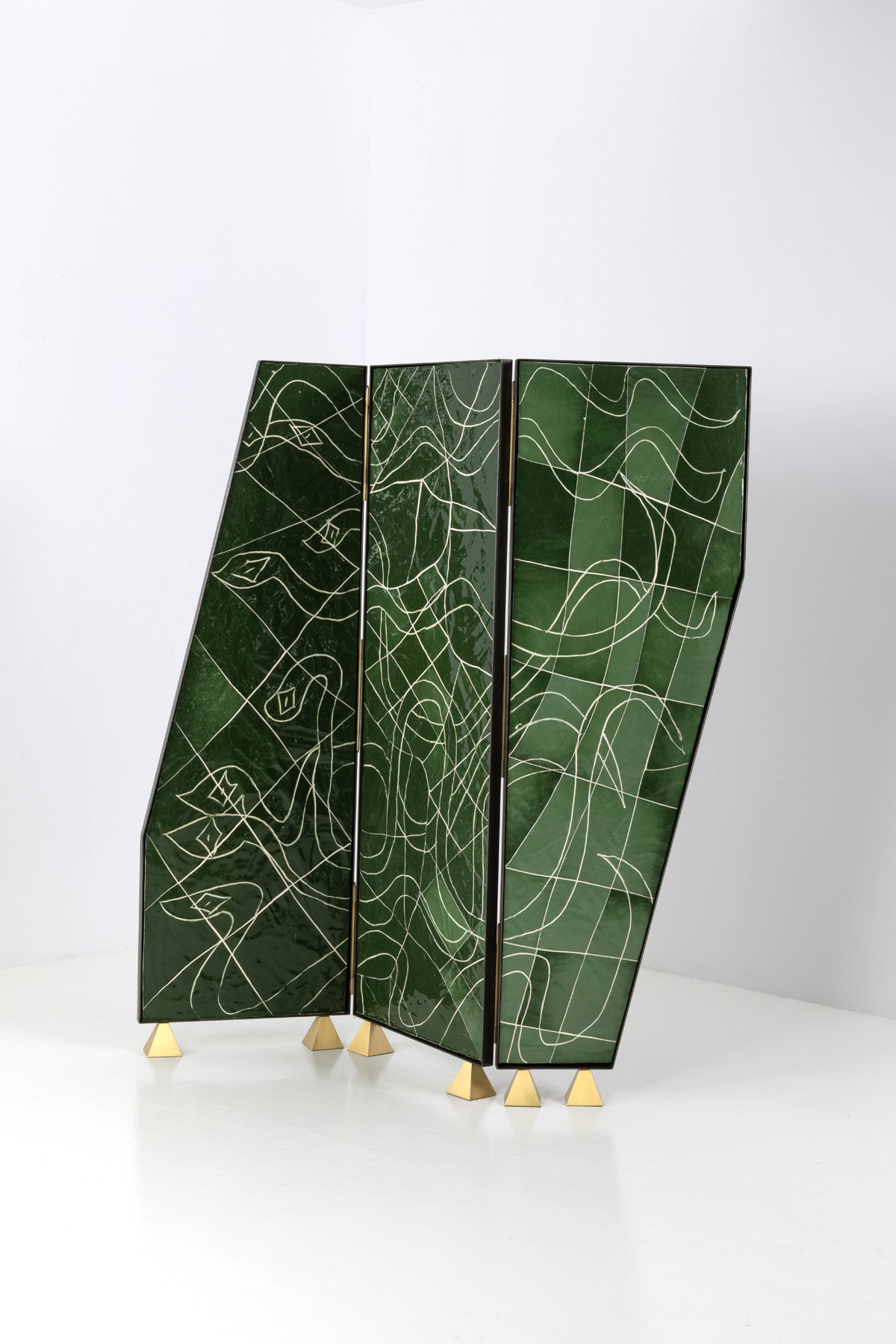
Maximilien Pellet (b. 1991) is a Paris-based artist working primarily in ceramics and using his passion for drawing as a basis for his compositions. His intricate technique involves engraving the previously drawn motifs into liquid clay, which he pours onto the surface, models by hand, paints, cuts, then fires, enamels, and reassembles into new shapes. It is the material that guides his process and allows figures to emerge almost instinctively from the surface.
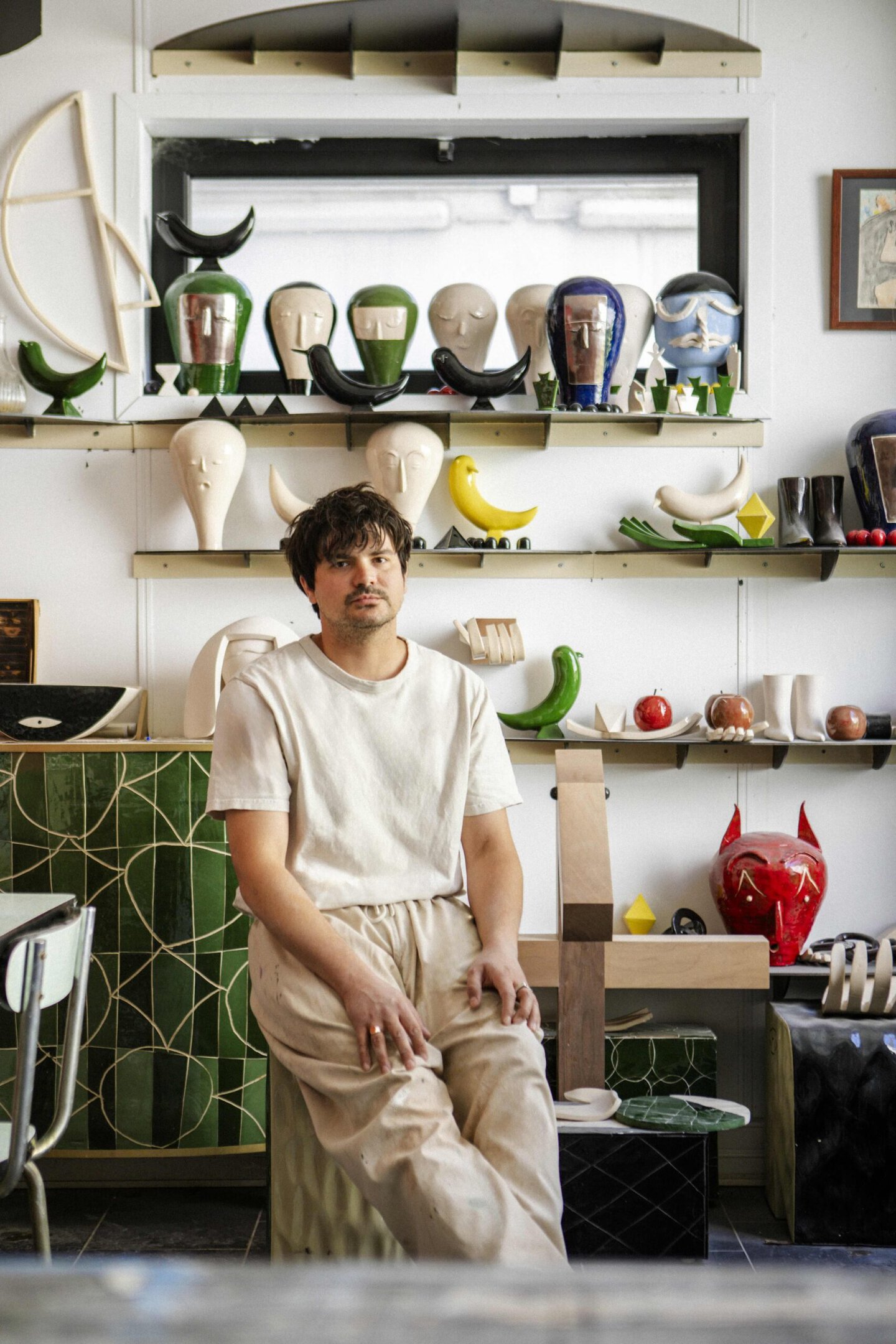
His body of work engages with the history of portraiture and decorative arts, drawing inspiration from the notions of geometry and vernacular art traditions. Working through colour and shape, the artist creates pieces that bring to mind both the style of twentieth-century constructivism or cubism, and Art Deco aesthetics. Pellet also collaborates with architects, producing large-scale decorative compositions for hotels and public spaces in France and abroad.
Geometry and Fragmentation
His style and creative process are often described through a comparison with tangram, a traditional Chinese geometric puzzle made of seven flat shapes that can be rearranged into different compositions resembling objects, animals or human silhouettes. The exact origin of this puzzle game is unknown, but one legend says it was born after a Chinese emperor broke a ceramic tile into small pieces, which may have sparked the idea of rearranging the fragments into different shapes.

Similar logic can be observed in Pellet’s art. His latest presentation at the Art Paris fair, showcased at the Double V Gallery stand, featured a set of geometric figures defined by a simplified, segmental composition, often rendered in a single colour. On closer inspection, the silhouettes reveal intricate arrangements of ceramic fragments whose varied shapes create subtle patterns across otherwise flat surfaces, giving them a distinct sense of movement and rhythm.
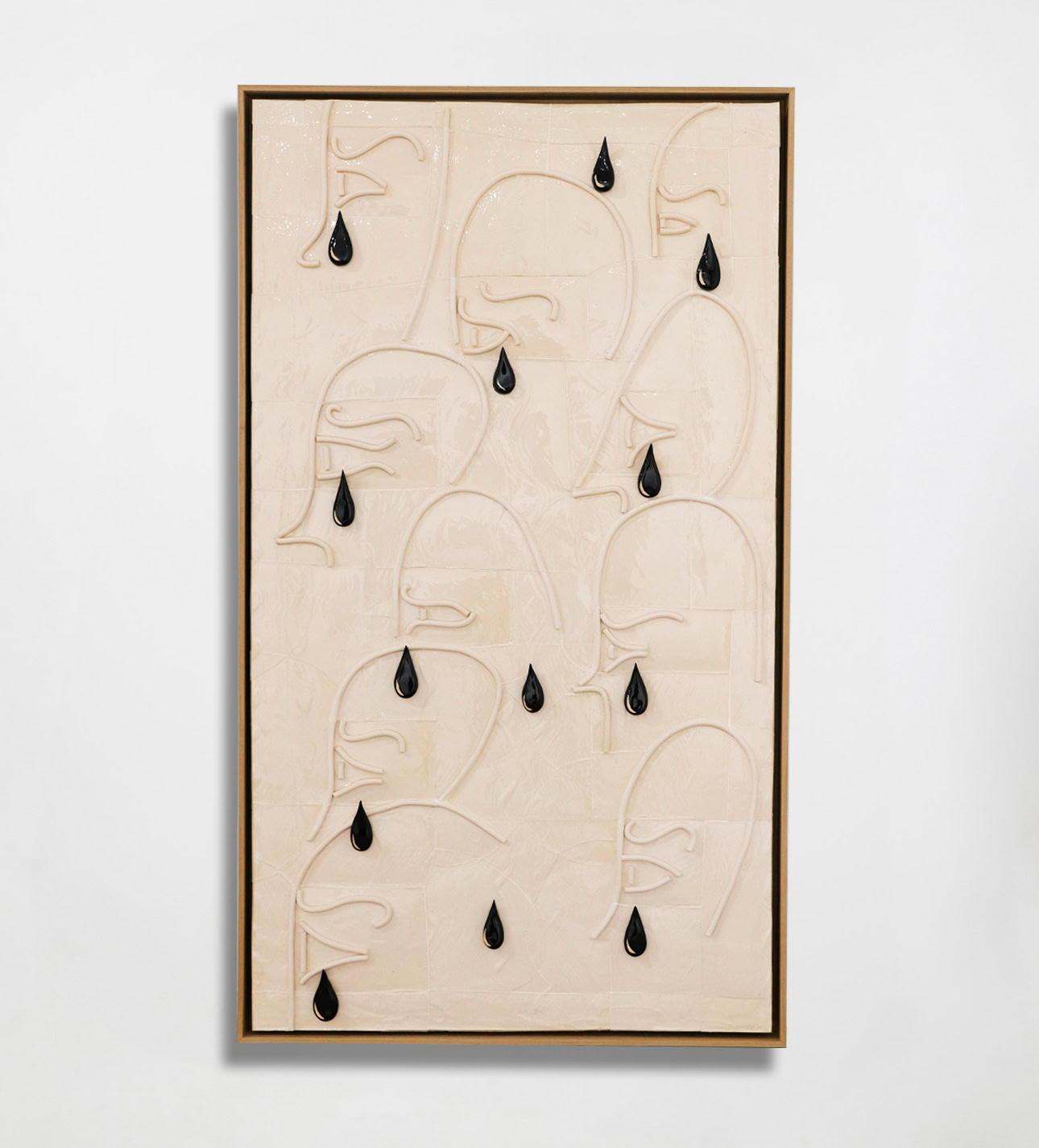
The four geometric pieces resembling human silhouettes are completed with heads, hands, and feet. Their closed eyes and rather pensive expressions subtly evoke figures of saints from stained-glass church windows – themselves composed of mosaic-like fragments of coloured glass. In particular, the beige tall figure bears resemblance to Christian iconography, with drops of blood dripping from its hands as if from the stigmata. The four silhouettes are further complemented by a freestanding red figure of an imp or a demon, which introduces a devilish yet slightly whimsical counterpoint to the otherwise quasi-sacral composition.

The installation at the Art Paris fair was inspired by the history and legends of Fontevraud, home to the UNESCO-listed medieval abbey. Founded in the twelfth century, the site is known both as the burial place of the kings and queens of England from the Plantagenet dynasty, and for its layered history as a monastery, prison, and contemporary cultural centre. Pellet’s figures echo this distinct history through their quasi-sacral imagery, references to medieval mythology of heaven and hell, and a funerary character of the geometric silhouettes, which appear suspended between sleep and death.

Vocabulary of Forms
Pellet’s fascination with ornamental forms in art comes from his interest in prehistoric and ancient relics, as well as twentieth-century avant-garde movements. He draws on historical motifs and modern ideas alike, establishing a visual language that enters into dialogue with both the past and the present. Through his process of reconfiguration, familiar forms acquire fresh meanings and establish new visual mythologies.

The ceramic mural designed for the Cheval Blanc hotel in Seychelles in 2024 features simplified silhouettes of animals and people, reminiscent of Etruscan and early Greek art, rendered through the language of abstraction. Pellet uses only three colours – green, blue and white – and builds the scene with elementary geometric forms. Through shifting arrangements of shapes, he creates a vivid sense of movement, turning the mural into a scene of a lively celebration.

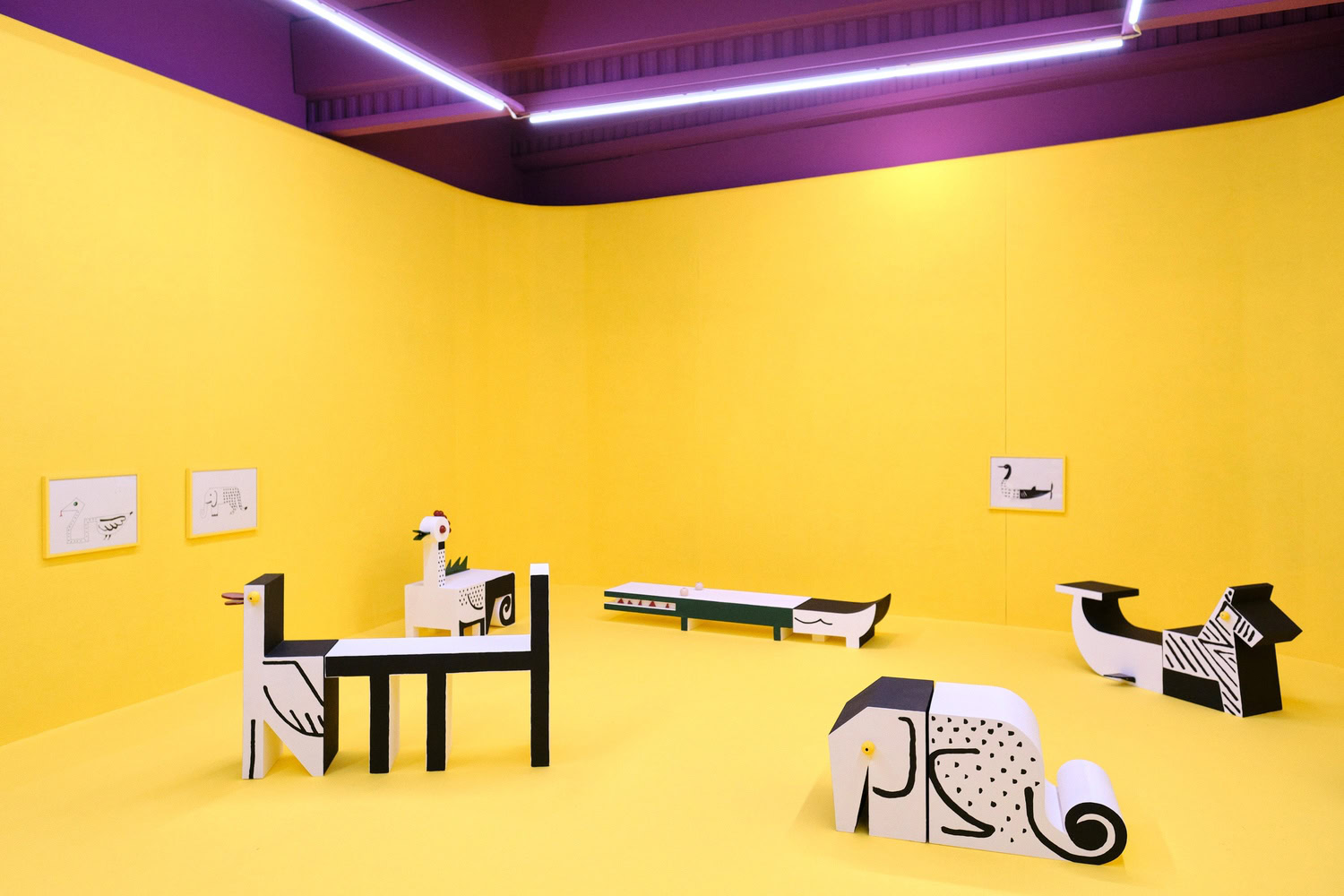
Pellet’s portfolio also includes projects that engage with design and fashion. Pieces like Costume de cérémonie (2023) reveal a more pop art-inspired aesthetic through bold, graphic depictions of droplets. A more playful side of his work emerges in 144 Animali (2023), a collection of zoomorphic furniture for children. Created by combining the forms of two different animals, each piece constitutes a part of an imaginative bestiary while remaining rooted in Pellet’s distinctive geometric style and elementary colour palette.
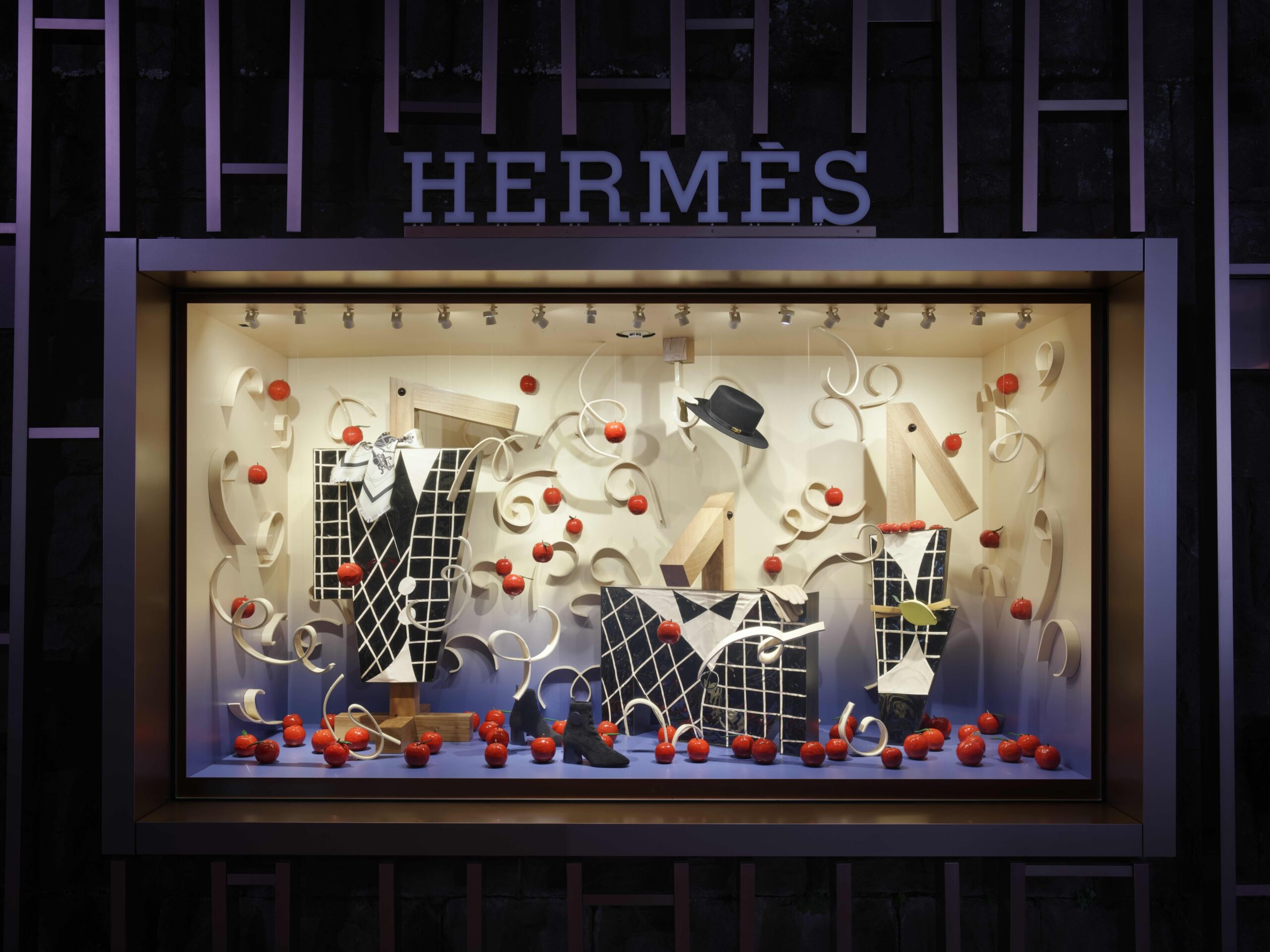
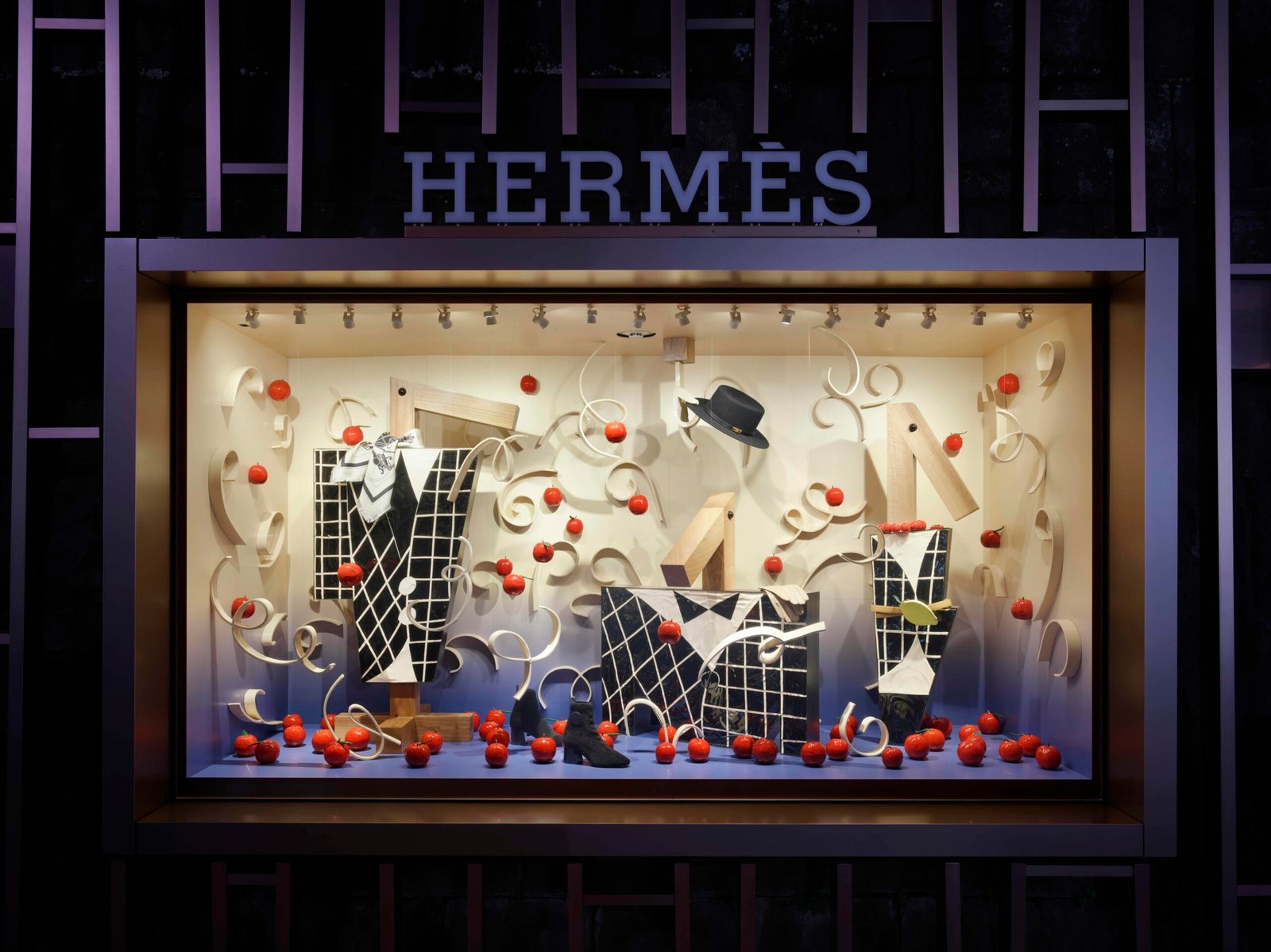
He was also responsible for designing a window display for the Hermès shop in Tokyo in 2024, which again employed simplified silhouettes of horse-like figures adorned with Pellet’s signature graphic ceramics. The installation highlights a more theatrical aspect of his work, combining whimsical sculptural forms with luxury accessories and transforming the display into a playful scene.

BIO
Maximilien Pellet was born in Paris, where he continues to live and work. He graduated from the École Nationale Supérieure des Arts Décoratifs de Paris in 2014 with a speciality in the printed image. Pellet has been long involved in the coordination of Villa Belleville in Paris, which offers studios and residencies for artists. His work has been exhibited in Rotterdam, Madrid, New York, and Miami. He also creates large-scale projects for both interiors and exteriors.
[ad_2]
Source link
