
[ad_1]
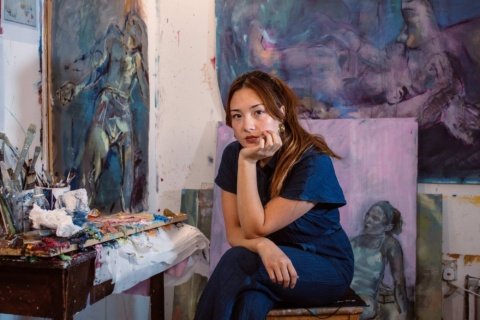
Flinders University Museum of Art (FUMA)’s Post-object and Documentation (POD) collection is one of Australia’s most significant records of conceptual art from the 1960s and 70s. Bridget Currie’s latest solo exhibition responds to the collection, breathing new life into these historic works.
Anarchive: knowledge follows form features Currie’s new work alongside pieces from the POD collection by Bonita Ely, Alison Goodwin, Poppy Johnson, Dorothy Thompson and Eva Yuen Man-Wah. The exhibition forms part of curator Sasha Grbich’s Experimental Art Anarchive research project – a second exhibition, Gut Feeling, opened last Friday at Adelaide Contemporary Experimental. For the Flinders show, Grbich and Currie spent hours exploring the archives to create a display that highlights the importance of this period of experimental art in South Australia.
Currie presents a body of work that connects the past and the present and looks at new ways to re-present experimental art. Preserving and archiving works from this period is not without its challenges as the works are often ephemeral and conceptual. Experimental art is about testing ideas rather than giving clear meanings and often challenges the psyche. Currie encapsulates this notion by pushing boundaries and inviting audiences to interact with and touch the works on display.
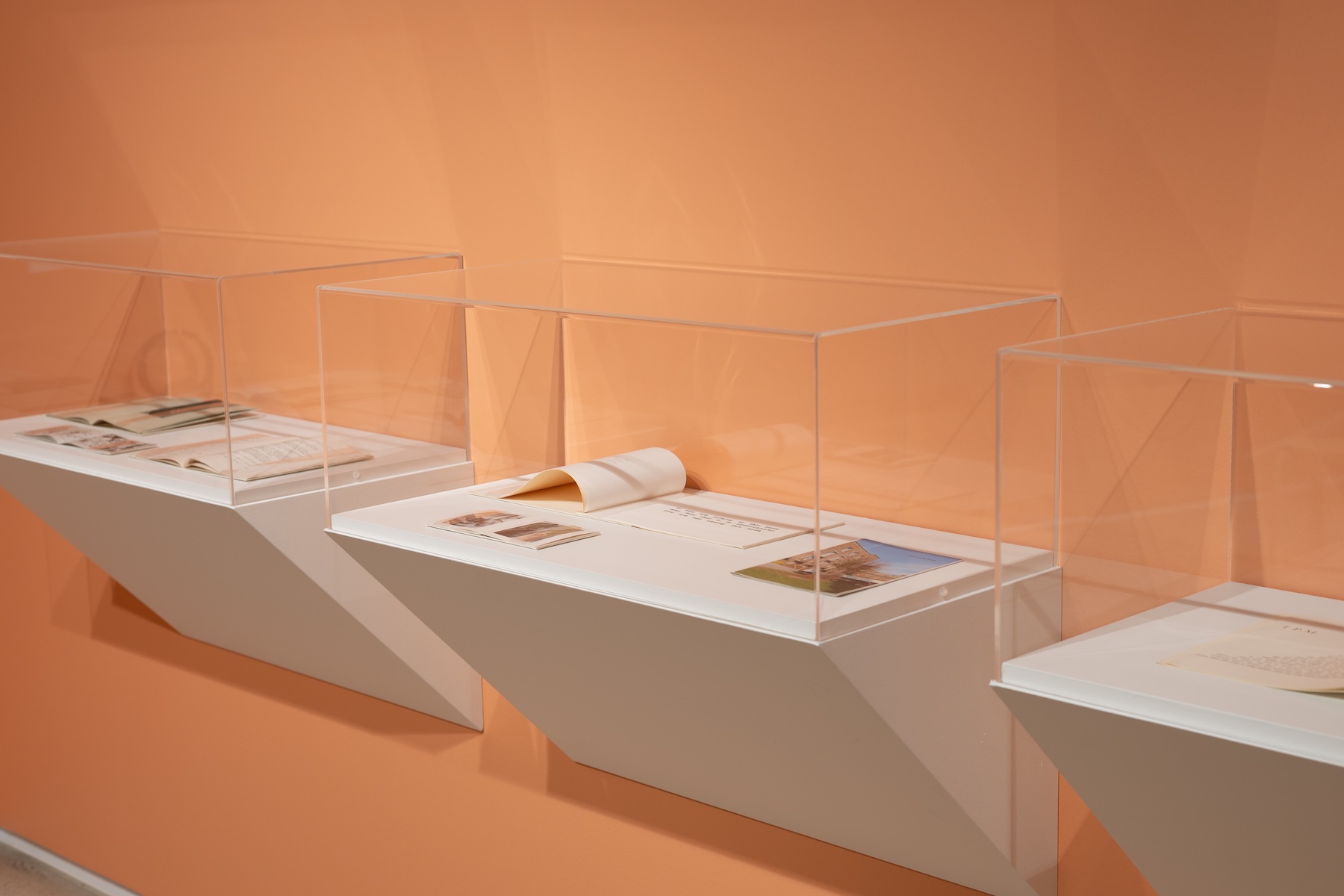
FUMA’s collection houses many artists’ books which are important records of performance art and temporary artworks. Currie has selected a number of these publications to exhibit alongside her book, Trees Among People, 2013. One of the works, Poet Jenny Boult’s Can’t help dreaming (1981) has inspired Currie’s piece Cut the world to fit.
In Cut the world to fit Currie draws on her own archives of tree photographs to create a collage of cut-out letters from arborglyphs (tree graffiti). These letters are pieced together to form a message, which is then printed onto fabric. This process is reminiscent of piecing together archival materials and Currie invites the audience to unfold and touch the work, enhancing the experience. She believes this creates an intimacy which is important to her practice. She says, “I like allowing people to touch or interact with works of art because it can bring the audience closer and focus attention.”
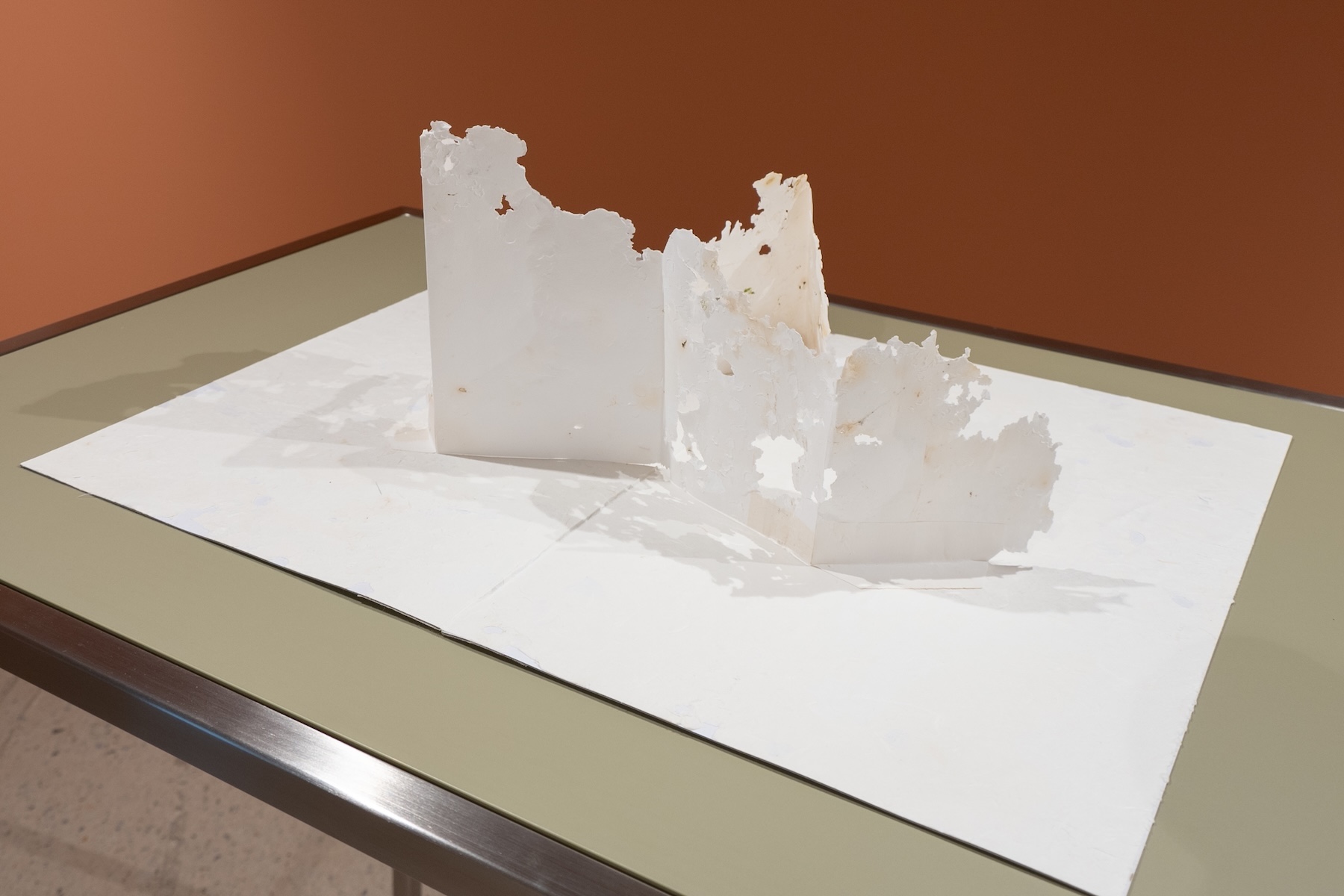
Collaboration with non-human ecosystems is not uncommon in Currie’s work, slugs have been a recurring motif for more than 10 years. She continues this exploration in Each Surface Touched, stating, “Originally this work was meant to collaborate with whatever gastropods were in my garden, but the drought did not agree with my plan.”
The work features mulberry paper eaten by snails, symbolising the gaps in the collection while also playing with the idea of digesting information. Currie ended up having to purchase the snails from the internet which she says, “is a beautiful metaphor for our times”.
The archives include documentation of Dorothy Thompson’s playful and political performances from the 1970s, where she was often dressed in bird costumes as a form of protest.
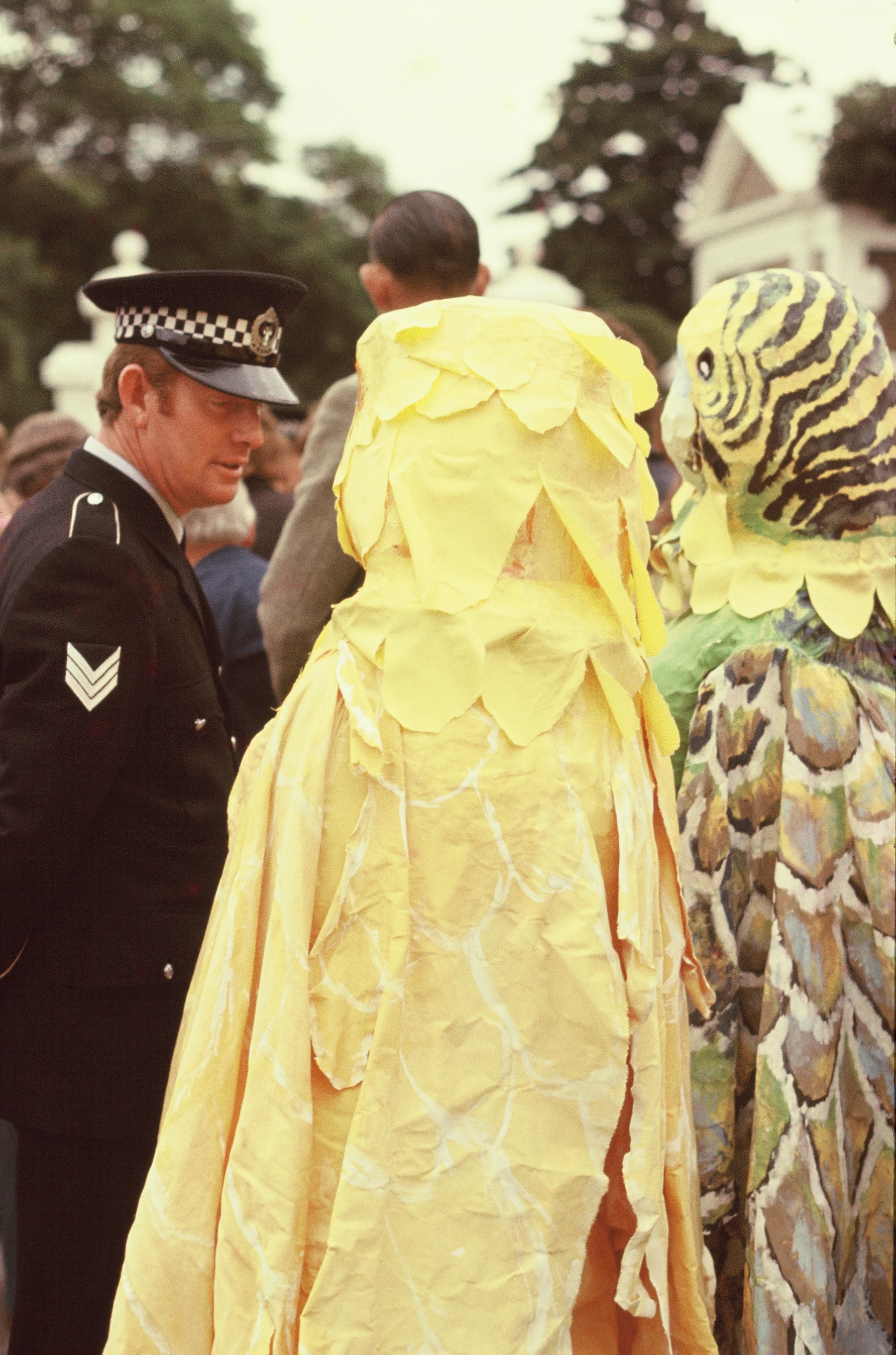
Currie renews these records, explaining that “most of those images have never been printed before with some from original negatives in the Experimental Art Foundation archives”.
She has even recreated Thompson’s costumes, allowing audiences to don the budgie costume and revisit the political spirit of the 70s. Thompson approached political demonstrations dressed as a budgerigar, making a statement about the political climate and its absurdity; a sentiment that resonates even today.
Currie wants audiences to experience what it was like exploring the archives, unfolding and unearthing these treasures. This led her to create the work Unfolding table (2025–26) which features aluminium archive boxes. “The table structure will hopefully provide the same wonder-full sense of taking objects out of dormancy,” she adds.
Anarchive: knowledge follows form highlights the importance of archival records and how valuable revisiting the past can be to inform the present. Currie and Grbich hope the exhibition reflects the time spent unpacking, unfolding, digesting, remaking and studying the collection. Audiences are encouraged to take time to immerse themselves in this exhibition – just as Currie and Grbich dug deep into the archives.
Anarchive: knowledge follows form is on display at Flinders University Museum of Art until June 19
[ad_2]
Source link