[ad_1]
A basic income scheme has already been piloted in Ireland
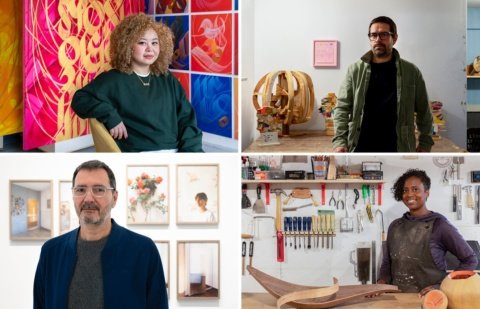
Over 300 artists, arts organisations, academics, think tanks and campaigners have signed an open letter urging new MSPs to prioritise the development and delivery of a Scottish basic income for artists pilot.
In its manifesto, the SNP vowed to pilot a minimum income for artists, following a similar scheme introduced in Ireland earlier this year. It said the Scottish Artists Minimum Income would give “targeted support” to an unspecified number of artists to allow them to develop their craft and “contribute to Scotland’s cultural life”.
The open letter, which has been signed by figures from the arts and culture sector in Scotland including Edinburgh Makar Michael Pedersen, Daniel Abercrombie, director of the Scottish International Storytelling Festival, Sorcha Dallas, curator at the The Alasdair Gray Archive and folk musician Iona Fyfe, calls on all of Scotland’s political parties and cultural institutions to engage “constructively” with the proposal and commit to a pilot that is co-designed with artists and evidence-led.
In Ireland, a pilot of a basic income scheme, Basic Income for the Arts (BIA) has become a permanent programme, paying 2,000 artists €325 per week.

Cleo Goodmann, co-founder of Basic Income for Artists Scotland, said: “We look forward to welcoming our new MSPs today and ask them, as they enter Parliament next week, to remember the artists, musicians, writers and makers in their constituencies who are carrying our cultural industries yet struggling to make a decent living.
“A basic income for artists pilot was promised. We are here to make sure that promise is kept and that when the pilot is designed, it is designed with artists’ input.”
Ms Fyfe said: “A basic income for artists provides advantageous benefits to all of society – not just the artists who are directly financially supported. To nurture happy, healthy, arts practitioners who are less stressed about their financial circumstances undoubtedly allows the creative to focus on producing meaningful art.
“Creative practitioners’ contributions to society goes well beyond immediate financial impact, but will nurture the entire wellbeing economy. To nurture artists is to nurture basic human needs.”
Theatre director Andy Arnold, a former director of Tron Theatre and the founding director of The Arches, Glasgow, said many artists are struggling to make a living from their work.
He said: “The Scottish Government boasts constantly about its artistic and cultural activities and yet the vast majority of artists living and working here struggle to make any sort of living from their work.
“In Ireland a new scheme exists whereby 2,000 artists are given a basic wage of €325 per week and the payback to the country is already looking impressive in terms of artistic output and economic benefit. Scotland can do better rather than follow suit.”
Glasgow Culture Conditions, a collective formed to resist the closure of creative spaces in Glasgow, said a basic income was necessary to “address the deepening economic inequalities that shape the cultural sector”.
A spokesperson said: “A basic income for artists must be unconditional, universal and non-competitive, not another capped bureaucratic scheme as an extension of universal credit, but it must be secured as part of a wider shift for long-term stability, equity and permanence for culture.”
[ad_2]
Source link