

[ad_1]
As the UAE’s cultural institutions expand in both scale and ambition, the role of independent foundations has become increasingly significant in shaping how art is accessed and understood. At the Bassam Freiha Art Foundation, this approach is defined by a commitment to public engagement, curatorial depth and a dialogue that moves fluidly between regional and international perspectives.
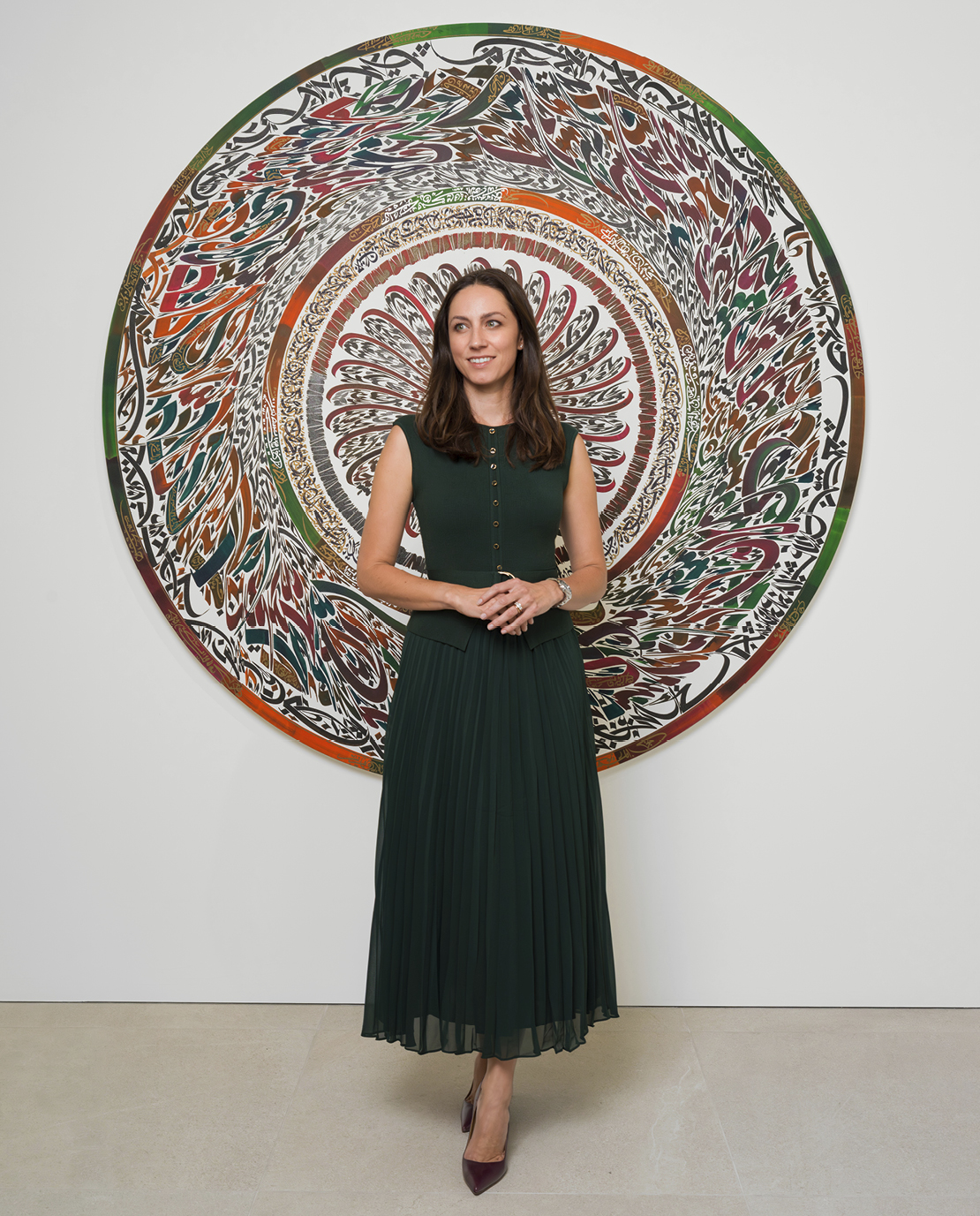
As Curator and Director of Exhibitions, Michaela Watrelot plays a central role in developing this vision, overseeing a programme that brings together historical narratives, contemporary practices and educational initiatives. Positioned within Saadiyat Cultural District, the foundation offers a distinct model, one that balances private collection with public access, while creating space for emerging voices and critical discourse.
In this conversation, Watrelot reflects on the evolving cultural landscape of the UAE, the thinking behind recent exhibitions, and how institutions can foster deeper, more meaningful engagement with art today.
How would you define the role of the Bassam Freiha Art Foundation within the UAE’s evolving cultural landscape today?
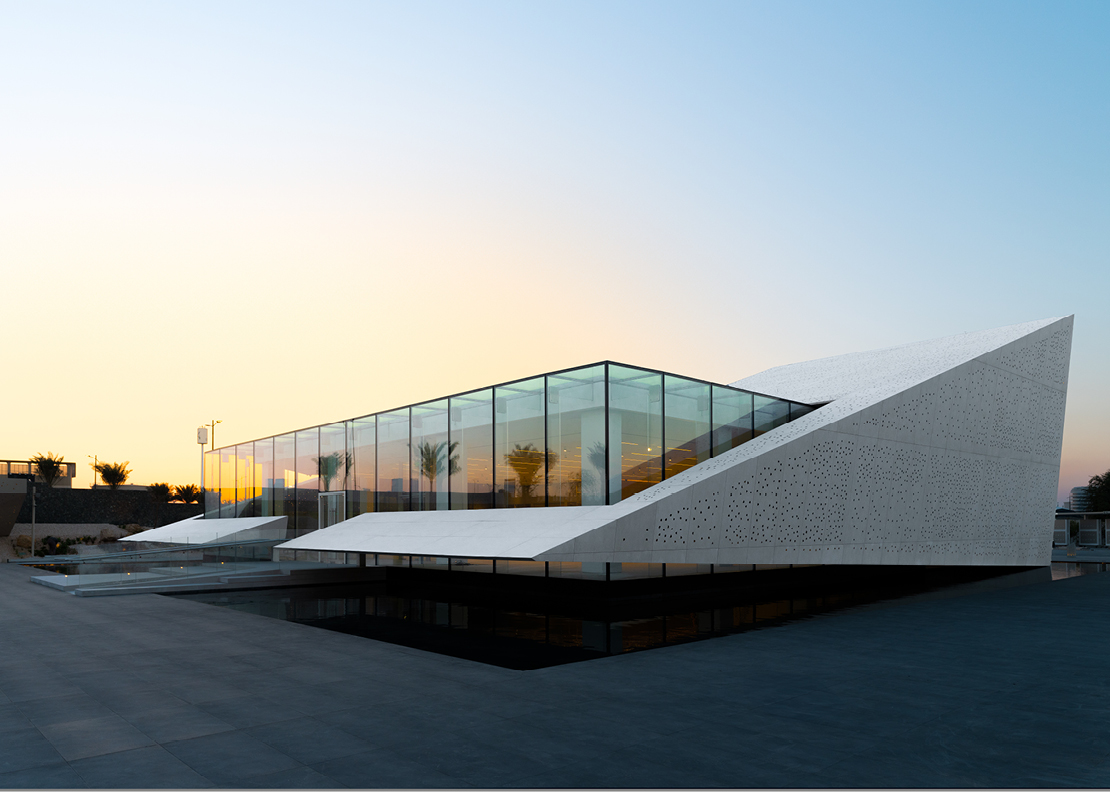
Bassam Freiha Art Foundation (BFAF) occupies a specific position within the UAE’s cultural ecosystem. Founded by philanthropist and collector H.E. Bassam Said Freiha, the foundation was established with a clear dual purpose: to make private art collections publicly accessible, and to provide a platform for artists from the UAE, the wider Arab world, and beyond. As a non-profit institution, that philanthropic foundation shapes everything we do, from our free admission policy to the breadth of our educational programming. We are not a commercial gallery, nor are we a state institution, and that position allows us to move with a certain curatorial freedom, presenting material that is historically grounded while remaining responsive to contemporary conversations.
What distinguishes the Foundation’s curatorial vision and programming, particularly in the way it engages both regional and international narratives?
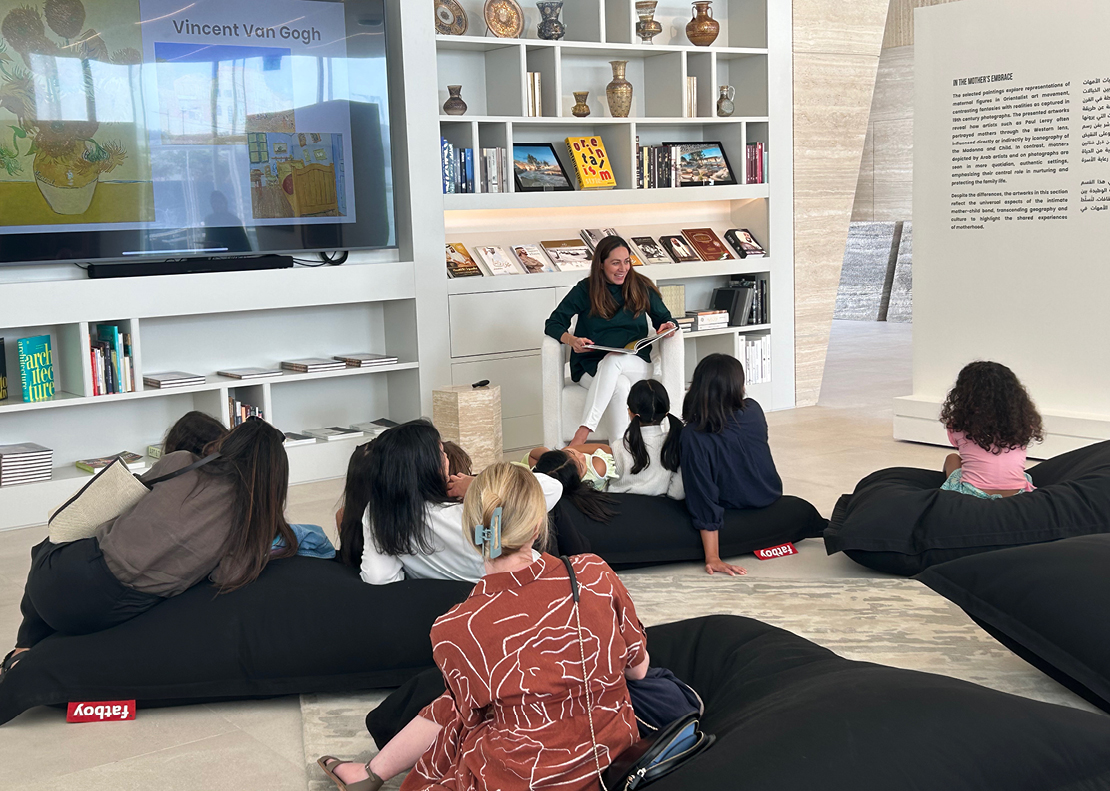
H.E. Bassam Said Freiha’s focus on Orientalism and the collections we bring in from other private collectors, naturally raises questions about how the region has been seen, represented and how it has represented itself. No artistic tradition develops in isolation and that premise shapes how we build our exhibitions. We present the region’s art within the broader frameworks that shaped it, whether by looking at Arab modernism in relation to international movements or by tracing the Western gaze in Orientalism. Education is embedded within this framework. Every exhibition is accompanied by programming, whether workshops, lectures, or artist talks, that invite audiences to engage more deeply with what they are seeing. Our Story of Art series, tracing key art movements from the Renaissance to contemporary practice, has become one of our most attended programmes, which tells us something about the genuine appetite from UAE audiences for that kind of sustained engagement.
When developing an exhibition programme, what are the key elements you look for when selecting projects and artists?
An exhibition needs to have intellectual substance and the capacity to sustain extended engagement, whether through a single body of work or a more complex thematic structure. Beyond the work, we consider what the programme contributes to the broader cultural conversation we are building at BFAF. Each exhibition connects to those around it, building a body of reference for our audiences over time. Philanthropy is also part of that thinking. H.E. Bassam Said Freiha’s founding vision was rooted in public benefit, and that shapes the kinds of projects we take on. We ask not only whether a project is artistically strong, but whether it genuinely extends access to collections and voices that audiences would not otherwise encounter.
How important is it for the Foundation to create platforms for emerging talent, and how does this shape your broader programming strategy?
It is central to our purpose. Education and emerging talent are closely linked at BFAF. Through our university partnerships and our free public programming, we are invested in developing the next generation of artists, collectors, and cultural practitioners, not only giving them exhibition opportunities but building the critical literacy that makes those opportunities meaningful.
The Foundation recently launched a collaboration with Zayed University, marking its first artist-in-residence programme. Can you tell us about the vision behind this initiative and what you hope students will gain from the experience?
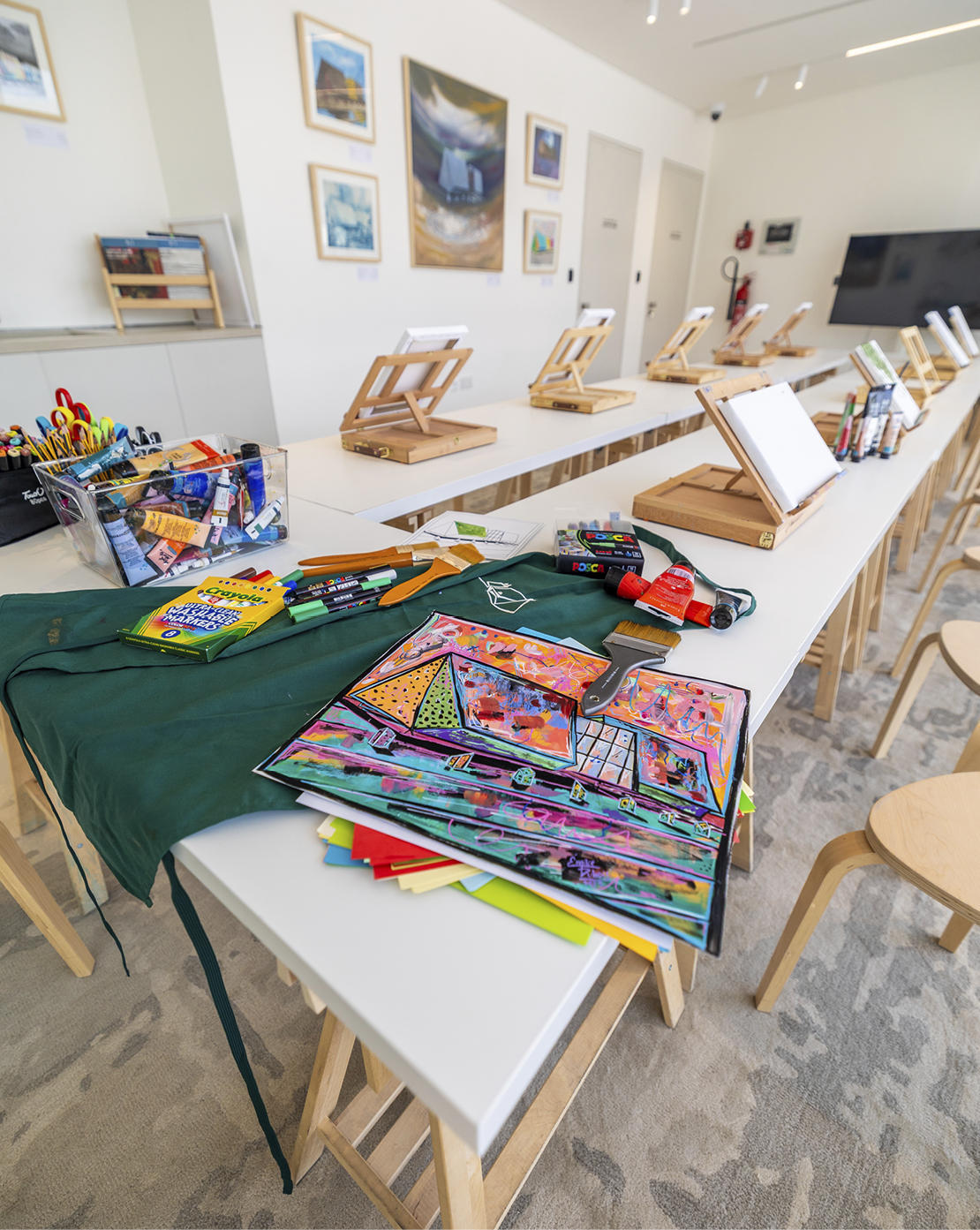
The collaboration with the College of Arts and Creative Enterprises at Zayed University is structured in three phases, each led by a different student group: one producing the photographic body of work, one curating the exhibition, and one developing its visual identity. Working with French photographer Philip Ducap, students photographed architecture, landscape, and portraiture across Abu Dhabi, producing work that will now form the basis of an exhibition titled Seeing Ourselves. It is conceived as a direct counterpoint to the Orientalist collection at BFAF, where those nineteenth-century European paintings present the Arab world through an outsider gaze, the student photographs invert that dynamic, images made by young people from the UAE, looking at their own world on their own terms.
The exhibition will be displayed in our Main Gallery from June 2026, and the work they produce will be seen by an international audience. That visibility matters, but so does the process of developing a critical and personal visual language, which is what the programme is fundamentally designed to support.
Turning to your current programme, Reflections: Modern and Contemporary Art from the Villain Collection brings together works from across the Arab world. Can you tell us about the curatorial vision behind the exhibition?
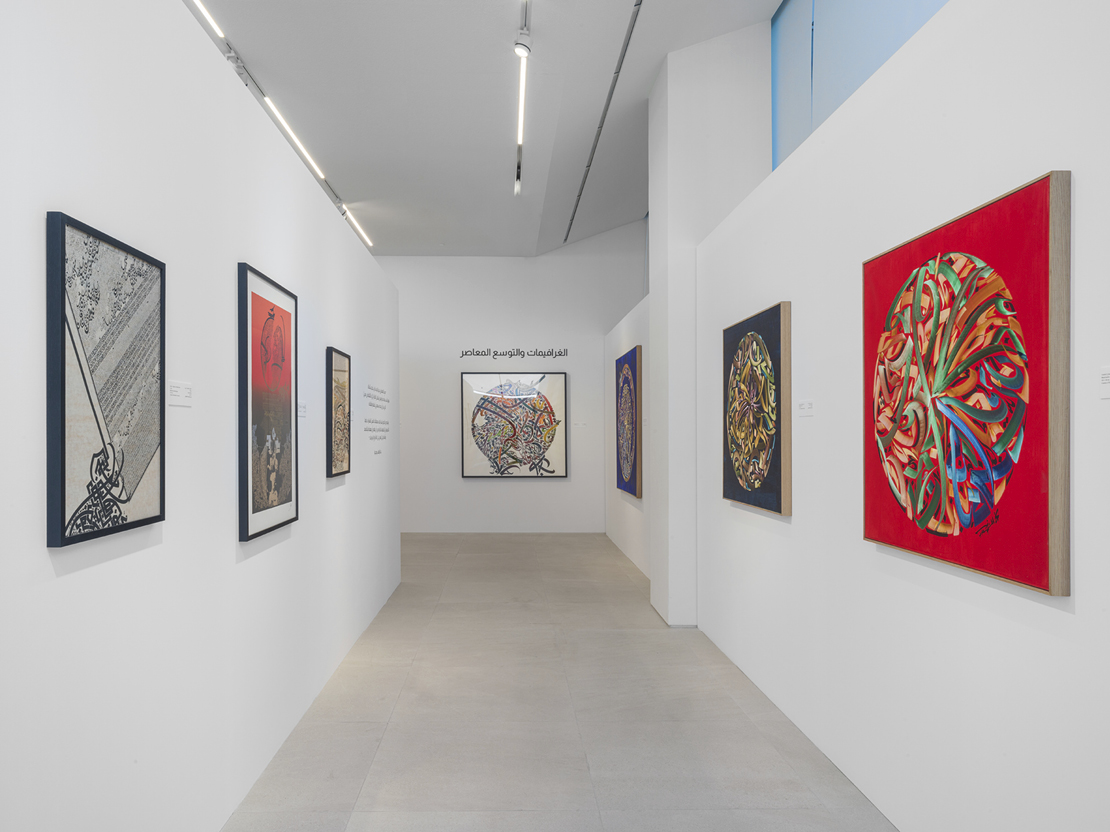
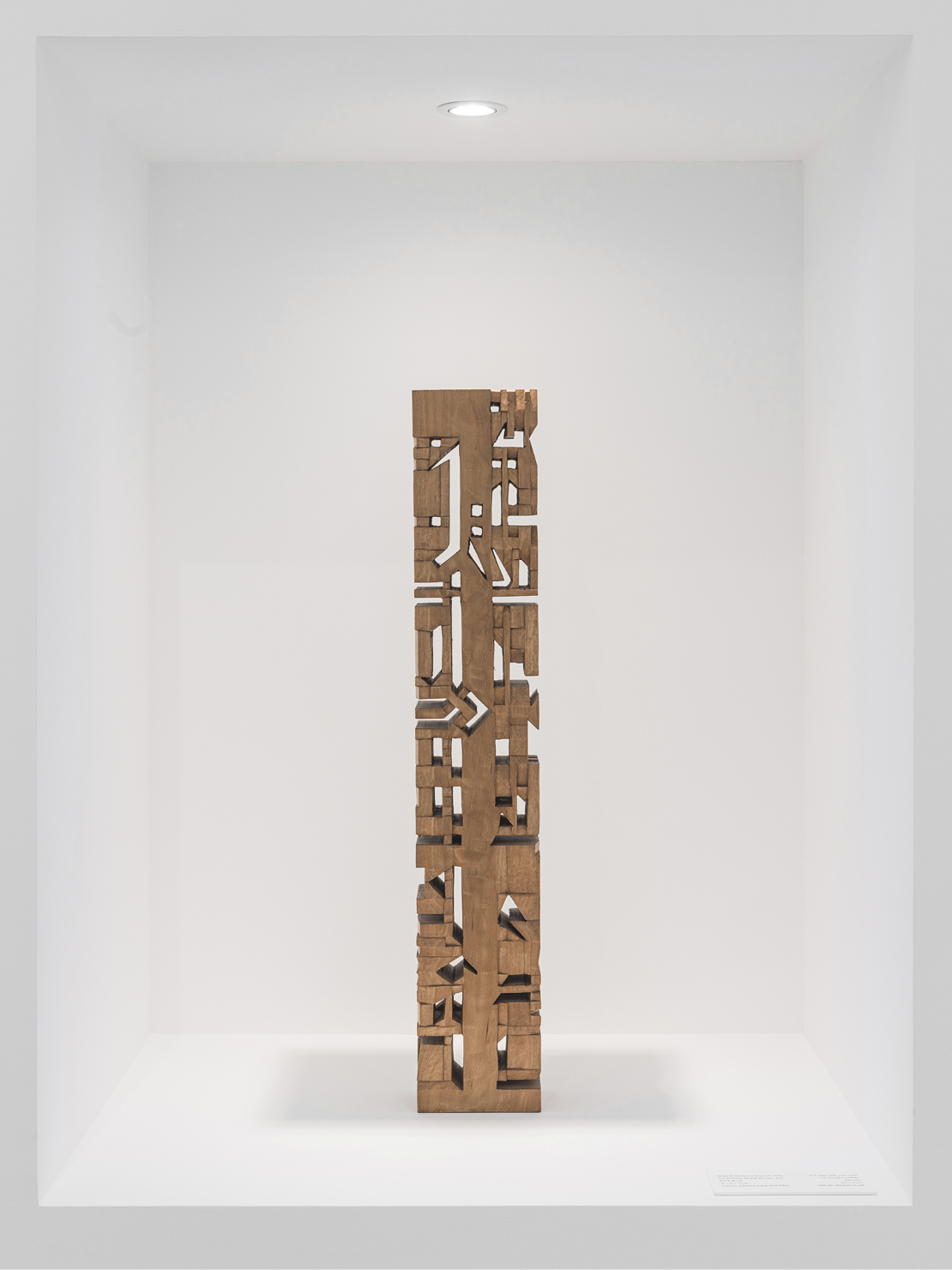
Reflections is built around the collection of Fairouz and Jean-Paul Villain, assembled over three decades through sustained relationships with artists across the Arab world. The exhibition traces the trajectory of that collecting journey across three zones: The Levant and the Greater Arab World: Voices Between the Lines, where works by Paul Guiragossian, Louay Kayyali, Etel Adnan and others move between figuration and abstraction to carry histories of displacement and endurance; North African Art: Forms of Continuity, which examines how artists from Morocco, Tunisia, Algeria and Egypt have treated cultural memory as something living and transformative rather than fixed; and Emirati Art: This Place, This Feeling, a zone deliberately positioned at the heart of the exhibition, reflecting the Villains’ long presence in Abu Dhabi and the relationships they built with the artists from the region.
What interests me about this collection is what it demonstrates about private patronage as a form of cultural responsibility. These works were not acquired to illustrate a thesis. They are the result of genuine, long-term engagement with artists, and that relationship is itself part of what the exhibition explores.
The exhibition is organised into interwoven sections that move beyond geography and chronology. What kind of dialogue were you hoping to create between these works and cultures?
Many of the artists in Reflections were educated across different countries, worked in multiple contexts, and were in conversation with movements far beyond their immediate region. The thematic structure allows those connections to surface. The dialogue we were hoping to create is less about comparison and more about shared concerns. Across all three zones, the recurring questions are displacement and endurance, the relationship between heritage and contemporary form, and what it means to look at one’s own world on one’s own terms.
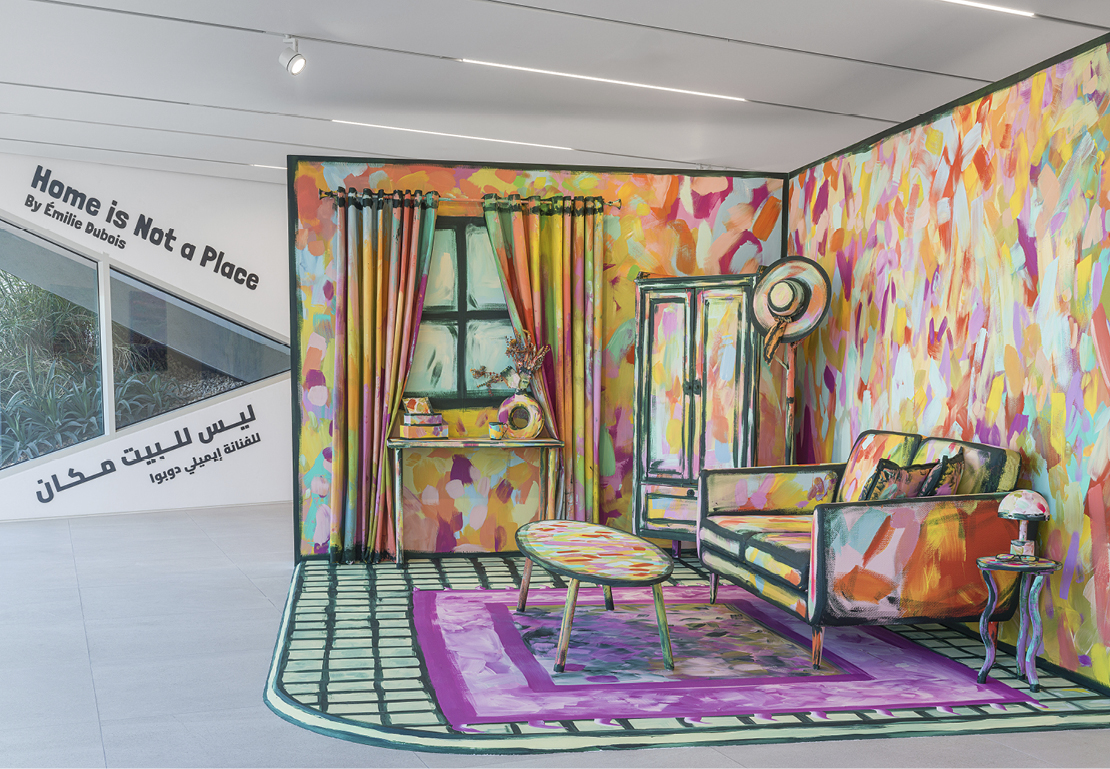
Home Is Not A Place explores the idea of belonging through a deeply personal and immersive lens. Can you tell us about the thinking behind presenting this exhibition?
Emilie Dubois’s work considers home as something assembled over time rather than attached to a fixed location. That idea resonates strongly in Abu Dhabi, where most residents know what it feels like to live away from their place of origin, and where questions of belonging are part of everyday life. The exhibition speaks directly to that experience and bringing it to BFAF reflects our commitment to presenting work that is genuinely relevant to the community here.
As an immersive experience, how does the exhibition invite audiences to engage with the concept of home in a more emotional or sensory way?
The central element is a living room installation where walls, furniture, and floors are painted with broad, expressive brushstrokes. Visitors are invited to step into it physically, which changes the nature of the encounter entirely. Rather than standing in front of a work and observing it, you are inside it. The colourful mixed media works surrounding it add another layer, drawn from Dubois’s own experience of building a life away from Guatemala. Together they trace what we carry with us, what we leave behind, and what we gradually reconstruct. Because so many visitors share some version of that experience, the exhibition tends to produce a reflective quality that is harder to achieve through conventional display.
More broadly, how do you see the cultural landscape in the UAE evolving over the coming years?
The foundations laid over the past decade are beginning to produce something very layered. We are located in the heart of Saadiyat Cultural District in Abu Dhabi. With the Louvre Abu Dhabi now a mature institution, and the Zayed National Museum and Natural History Museum Abu Dhabi recently opened, there is a more complete ecosystem in place. Frieze Abu Dhabi and the forthcoming Guggenheim will strengthen the city’s connection to the international contemporary art market and deepen its engagement with global art histories. What I find most significant is the audience that has developed alongside these institutions, one that is increasingly informed and comfortable engaging with art across different periods and contexts.
What shifts are you observing in how audiences are engaging with art and exhibitions today?
There is a growing appetite for depth. Visitors are returning, attending lectures, joining workshops, and asking more specific questions about what they are seeing. That shift reflects the cumulative effect of years of serious cultural programming. At BFAF, we see it in how people move through our exhibitions and in the conversations that happen during public programmes.
Looking ahead, what can we expect next from the Bassam Freiha Art Foundation in terms of upcoming exhibitions or collaborations?
The 2026 programme continues to develop the curatorial direction we have established. Reflections and Home Is Not a Place are currently on view alongside Constructing the Orient: Fragments of a Western Dream, which remains open until 31 May. We continue our education programme, with a number of lectures, talks and workshops scheduled each month, and this summer we will present our student-led exhibition in collaboration with Zayed University. Our next series of exhibitions will open in October 2026, and we will announce them in the coming months.
By Lindsay Judge
[ad_2]
Source link
