
[ad_1]

Long associated with centuries-old houses and historic portraits, the National Trust is perhaps less readily linked with modernity. Yet among its holdings are some of Britain’s most important modernist homes – and with them, significant collections of 20th-century art. This year the Trust has partnered with the London Art Fair, the capital’s most established contemporary art festival, to give visitors the rare opportunity to encounter works by Paolozzi, Ernst and Duchamp, outside of their usual settings: 2 Willow Road and The Homewood.
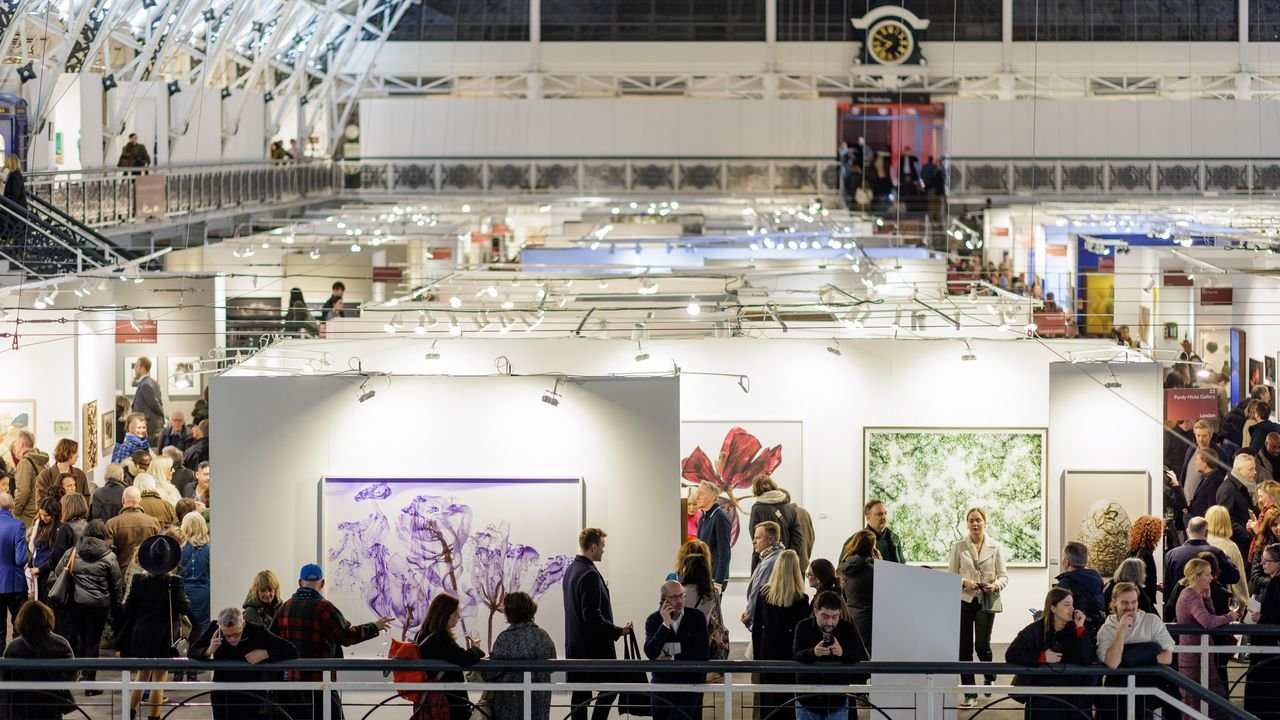
The National Trust has had partnerships with the Fair but after having been inspired by pavilions at the Fair in recent years, including last year’s partnership with Charleston, the hub of the Bloomsbury Group, the pavilion at this year’s fair presents an opportunity to introduce audiences to its 20th-century art collection.
2 Willow Road in Hampstead and The Homewood in leafy Surrey are ‘the jewel in the crown of our 20th century art collections,’ says John Chu, senior curator at the National Trust. Originally designed in 1936 by architect and furniture designer Ernő Goldfinger, plans for 2 Willow road caused controversy amongst the neighbours (one of whom was Ian Fleming, hence the oh-so-subtle reference to his neighbour’s name in his novel) but it was completed in 1939 after a redesign to appease local authorities. Its spiral staircase created by Danish designer Ove Arup has become an icon.
The Homewood is the only other 1930s property in the Trust’s collection. Architect Patrick Gwynne designed and built it in 1938, when he was just 24 years of age. He would live their for the duration of his life, continually updating and beautifying the house. Both houses were radical statements about how people could live.
‘The 1930s is a crucial note in the development of modernism in Britain, in architecture,’ says John. ‘Those were the only two houses that survived to the end of the 20th century with their contents intact, so they are really precious.’
While both houses are open to visitors who pre-book a tour, their display at London Art Fair places them in a different context, temporarily moving them from a domestic context and into an artistic one to highlight the treasure trove the Trust looks after. For John, it’s also a chance to tell the story of the relationship between the architects and their collections, and how they lived with the art they owned.
[ad_2]
Source link
