
[ad_1]
I will never forget my first visit to the Metropolitan Museum of Art, when I was around six years old. To say I was spellbound by the Ancient Egyptian holdings would be an understatement. The Temple of Dendur and endless trove of statues and vessels were awe inspiring, but I was completely transfixed when I came face to face with a turquoise-beaded broad collar and other intact jewels that had survived millennia. It was in that moment that I subconsciously made the connection between historical items of dress and their psychological power—thousands of years ago halfway across the world, someone had worn these accessories, and in my dream world I could imagine wearing them too.
This encounter reflects a more universal phenomenon, one that the museum’s latest Costume Institute exhibition, Costume Art, seeks to harness. “Across the museum’s collection spanning more than 5,000 years and cultures from around the world, one constant remains: the human figure, and more precisely, the dressed body,” Andrew Bolton, the Costume Institute’s curator in charge, said at the exhibition preview on 4 May.
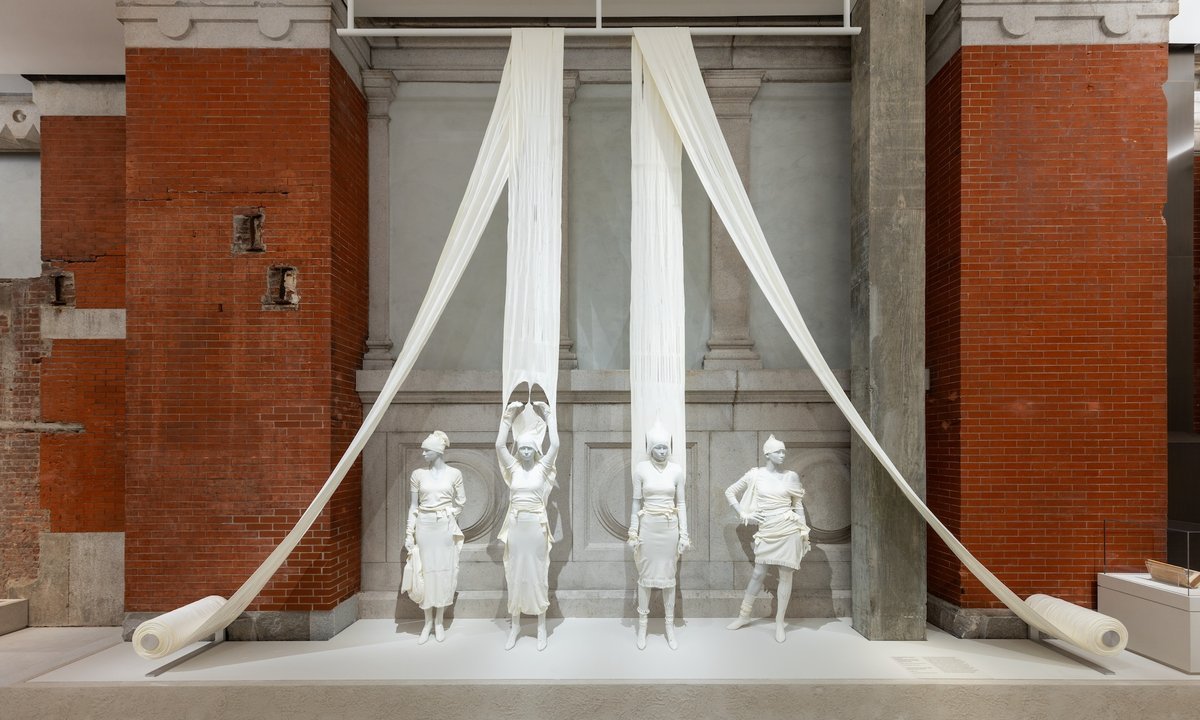
Together with Stephanie Kramer, the institute’s senior research associate, and the research associates Ayaka Iida and Emily Mushaben, Bolton conceived Costume Art as a cross-departmental blockbuster, with nearly 400 objects drawn from all 19 of the museum’s collecting areas. The show inaugurates the new Condé M. Nast Galleries, designed by the Brooklyn-based architecture firm Peterson Rich Office (PRO). Adjacent to the Great Hall, the nearly 12,000-sq.-ft space makes a powerful physical and symbolic statement about the centrality of dress within the museum.
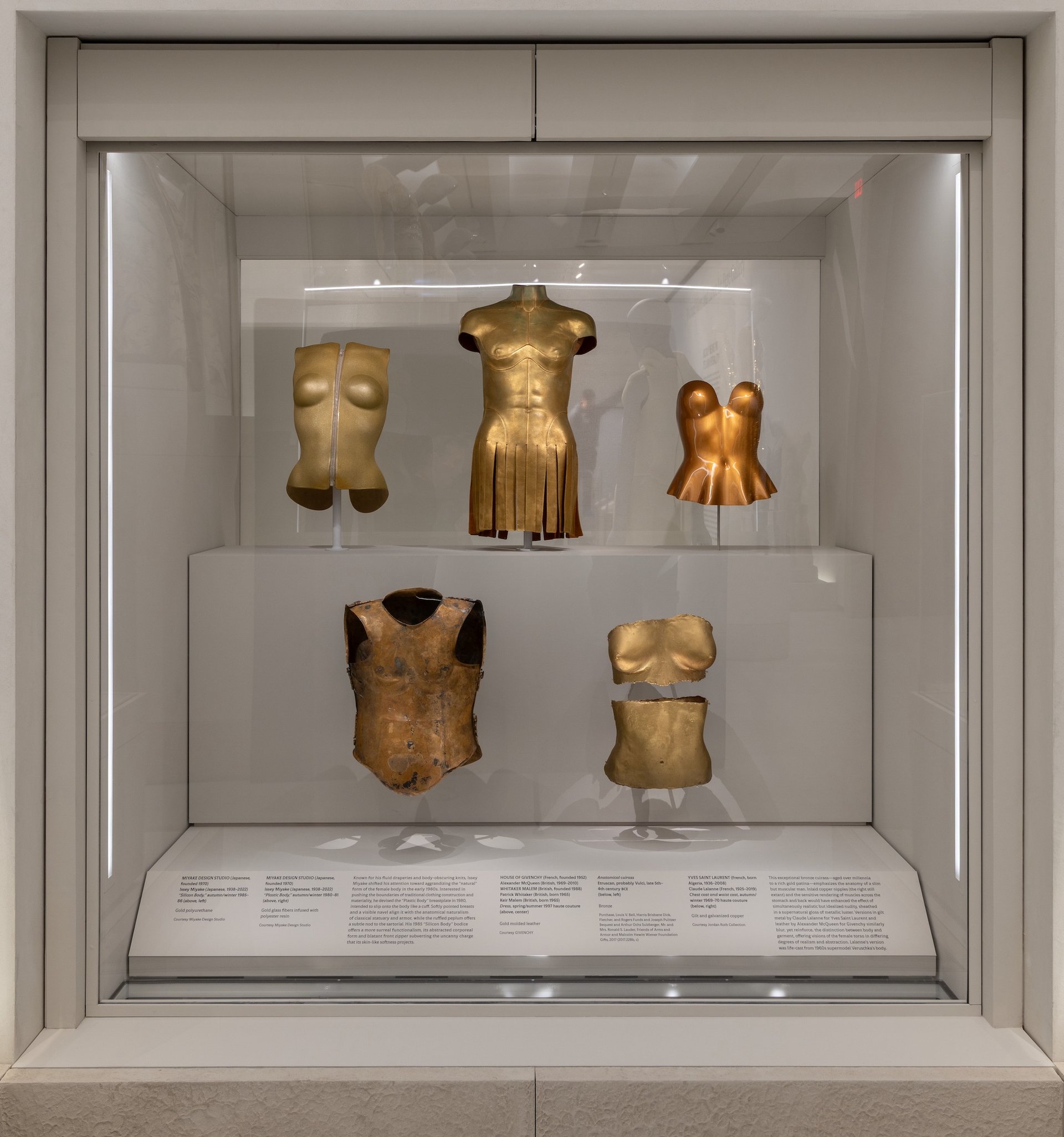
Installation view of the “Classical Body” section of Costume Art at the Metropolitan Museum of Art (until 10 January 2027) Photo © Anna-Marie Kellen / The Metropolitan Museum of Art
The exhibition’s concise title has generated some confusion. It is neither a show about costumes for the stage and screen, nor a straightforward show about fashion inspired by fine art. It is, in essence, a show about and organised into various body typologies—the “Classical Body”, the “Aging Body”, the “Naked Body” and so on—illustrated through a vast range of fine and decorative art objects. For people in the fashion industry and scholars of dress history, “costume” as a term encompasses the study of dress rather than “fashion”, which has more temporal associations.
That is a foundational distinction for the Costume Institute, which before joining the Met in 1946, began as the Museum of Costume Art in 1937. A small group of arts and theatre enthusiasts assembled the collection of historical garments with the intention of providing inspiration to theatre and film designers, as well as members of the trade. The Met merger, which received great support from the US fashion industry (much as the Costume Institute still does: Thom Browne, Michael Kors and Tory Burch all contributed to the Condé M. Nast Galleries renovations), played a major role in validating the field of dress research.
Until arguably the mid-2010s, the museum world collectively regarded dress as a lesser creative form than visual art. Largely due to the Costume Institute’s consistently thought-provoking, conceptual exhibitions, which have become some of the museum’s most visited of all time, mindsets have evolved (while events like the Met Gala, the department’s annual fundraising event, have catapulted costume exhibitions into the mainstream).
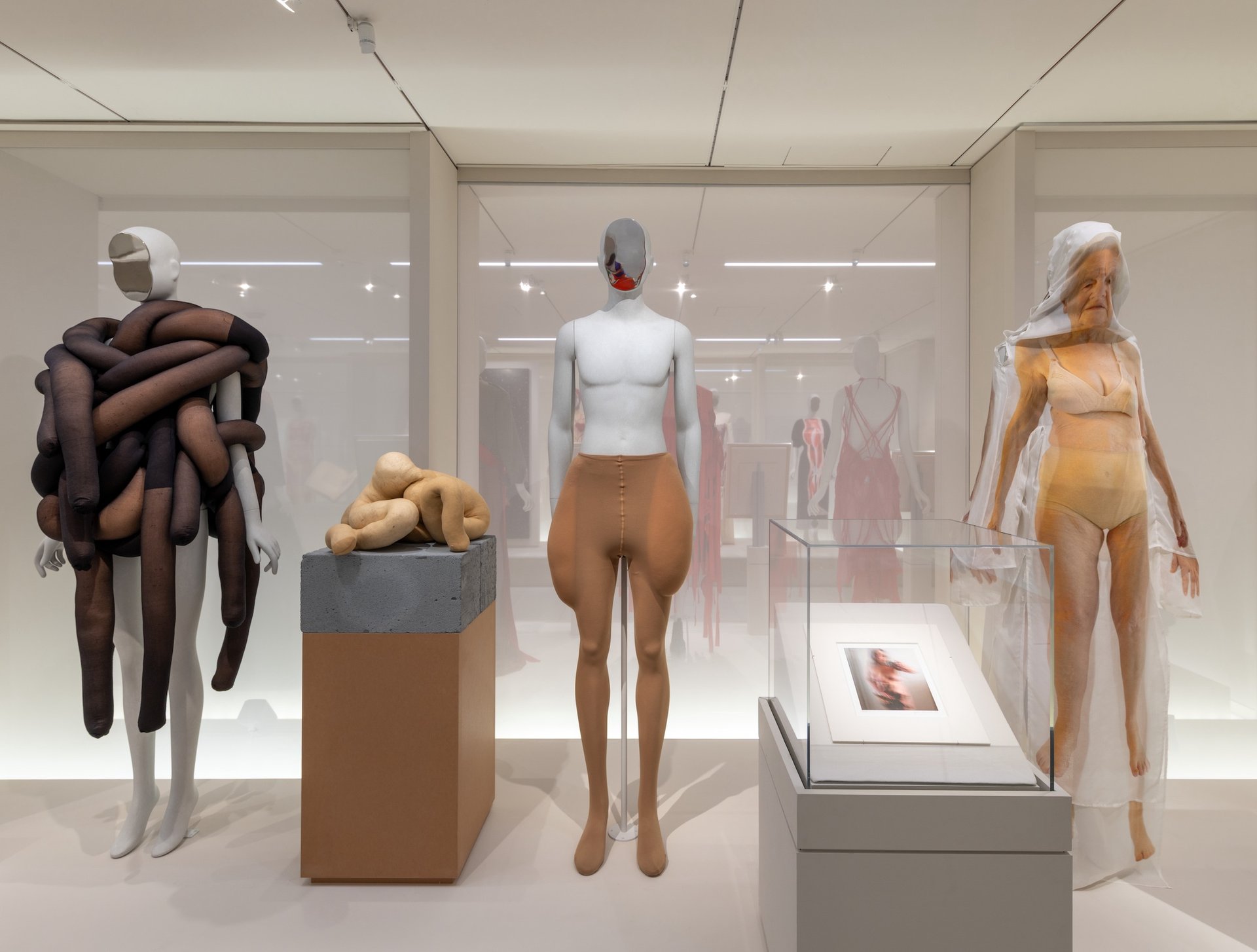
Installation view of the “Aging Body” section of Costume Art at the Metropolitan Museum of Art (until 10 January 2027) Photo © Anna-Marie Kellen / The Metropolitan Museum of Art
“I don’t think we could have done this show even ten years ago because the status of fashion has changed enormously, both within museums and within art and culture more broadly,” Bolton tells The Art Newspaper. “Twenty years ago, the question ‘is fashion art?’ was a real debate. Now there’s a genuine appreciation for the artistry, as well as the conceptual complexity of fashion. We see more and more artists incorporating fashion into their artistic practices; there’s more fashion criticism. Now when I approach all my colleagues, every single department is [happy to be] represented.”
In Costume Art, visitors will find Dior, Chanel, Alexander McQueen and Schiaparelli alongside titans of art history, from Albrecht Dürer and Vincent van Gogh to Pablo Picasso and Andy Warhol. They will also find Ancient Mesopotamian statues, Greek armour, Renaissance engravings, Japanese woodblock prints and anatomical illustrations.
“It’s not very radical to show art and fashion side by side, but I think our perspective is quite radical because normally when art and fashion are shown beside one another, you’re always encouraged to view fashion through the lens of art. Fashion becomes disembodied,” Bolton says, describing the exhibition’s cross-departmental pairings. “What I hope we’ve achieved is that you look at the art through the lens of fashion, so the art becomes embodied.”
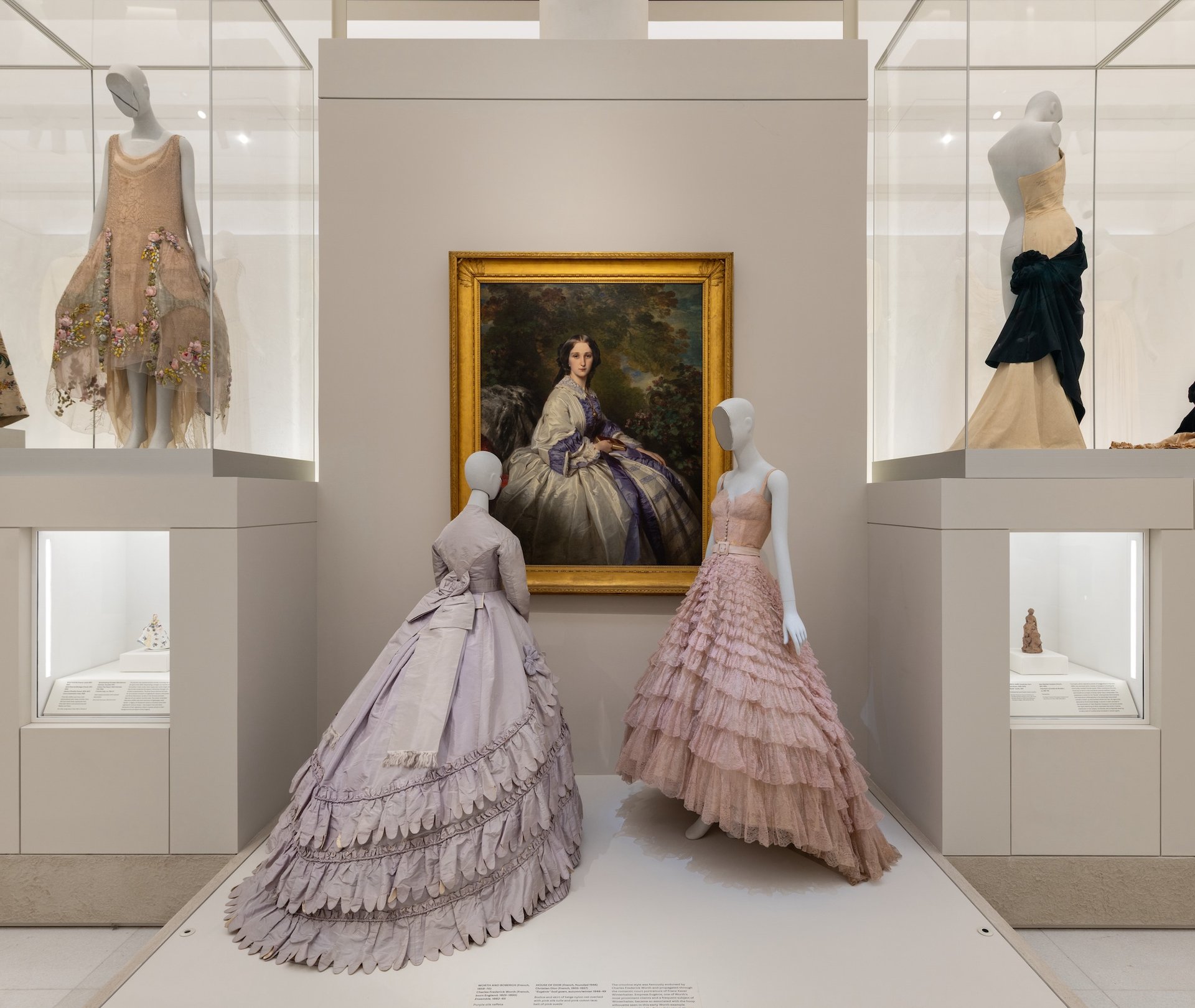
Installation view of the “Abstract Body” section of Costume Art at the Metropolitan Museum of Art (until 10 January 2027) Photo © Anna-Marie Kellen / The Metropolitan Museum of Art
Now, Bolton has galleries as ambitious as his curatorial practice. “We tried to give these galleries a feeling of permanence, as if they had been a part of the museum forever and would be a part of the museum forever,” says Nathan Rich, who designed the space with Miriam Peterson, paying special attention to the materials used.
By putting plaster on the walls, as opposed to painted sheetrock, the galleries emulate some of the Met’s most enduring collections, such as the Greek and Roman galleries. At the same time, the Condé M. Nast Galleries needed to be flexible. Due to dress’s sensitivity to light, it cannot be on view permanently, and other departments will also utilise the galleries. And while the Costume Institute’s spring shows will be staged in the Condé M. Nast Galleries, the department will retain the Anna Wintour Costume Center for its autumn exhibitions.
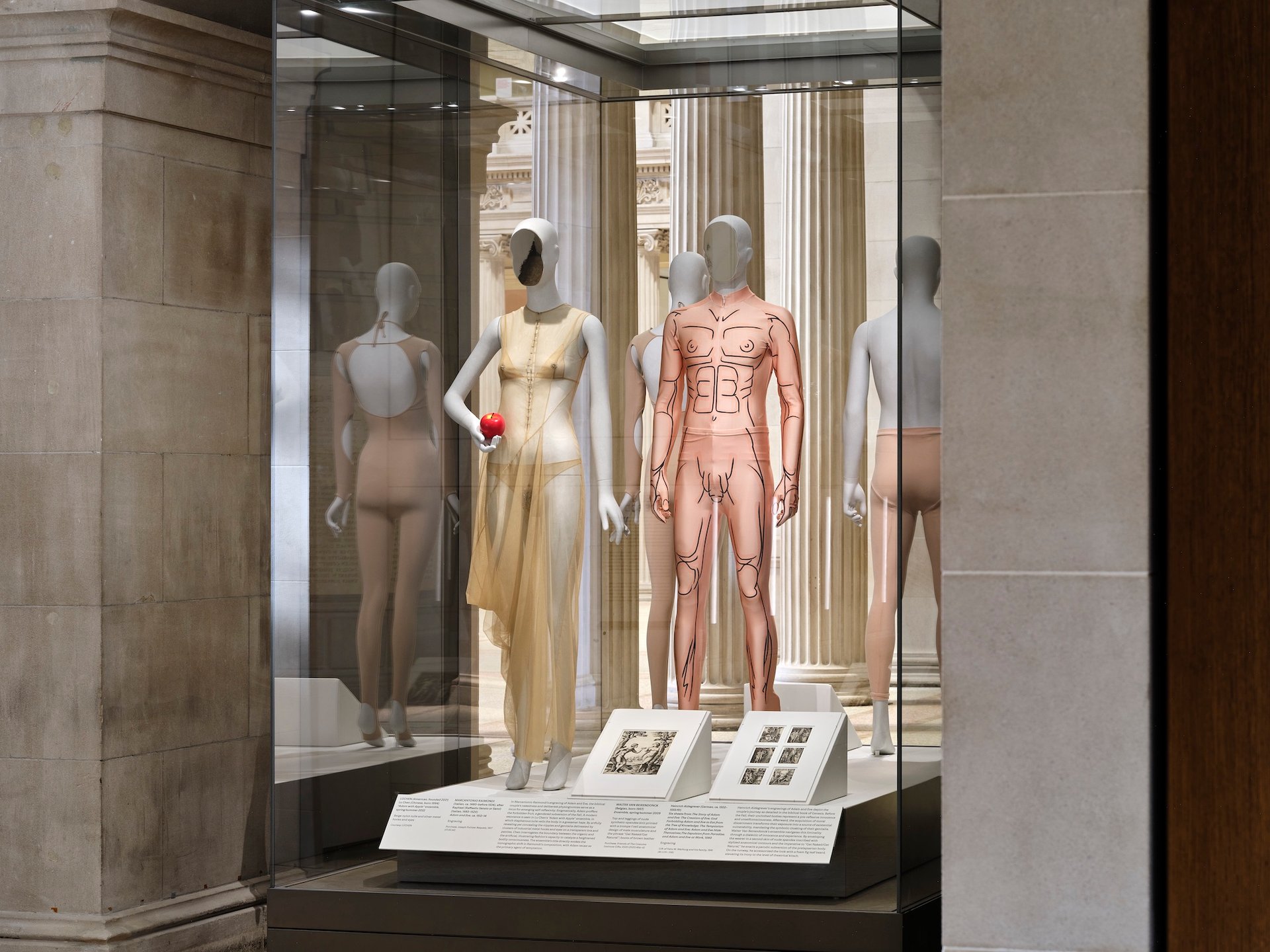
Installation view of the “Naked and Nude Body” section of Costume Art at the Metropolitan Museum of Art (until 10 January 2027) Photo © Nicholas Calcott / The Metropolitan Museum of Art
The new galleries feature five distinct spaces. After entering through the Orientation Gallery, visitors encounter the High Gallery (named after its 21ft-high ceilings) and the Low Gallery, or as Rich says Bolton calls them, “the cathedral and the crypt”. In the Finale Gallery and the permanent gift shop, Rich and Peterson illustrate why their firm is known for adaptive reuse. With the Condé M. Nast Galleries once being a courtyard, the architects reconstituted original walls and details, resulting in a compelling melding of architectural layers. Peterson and Rich’s designs for a reimagined ground-level public concourse, including new dining and retail spaces, plus a new 83rd Street entrance, will be revealed next year. (PRO is also designing new permanent galleries for the Brooklyn Museum’s Arts of Africa collection, set to open in autumn 2027).
Costume Art’s scenography, also designed by PRO, is densely packed with objects and information. Visitors will likely need multiple trips to read all the labels, but the payoff is worth it as certain pairings of art and garments cannot be taken at face value. For example, Van Gogh’s Irises (1890) is juxtaposed with two ensembles (Yves Saint Laurent spring/summer 1988 haute couture and Loewe spring/summer 2025 by Jonathan Anderson) that reference the artist’s famous series. At first glance, the garments might appear to merely be a product of the designers looking at art and wanting to emblazon their apparel with it. But Bolton focuses on the theme of neurodivergence and mental health. “Van Gogh suffered from mental health issues most of his life, as did Saint Laurent. Jonathan Anderson, who is dyslexic, is a huge supporter of neurodiversity,” says the curator.
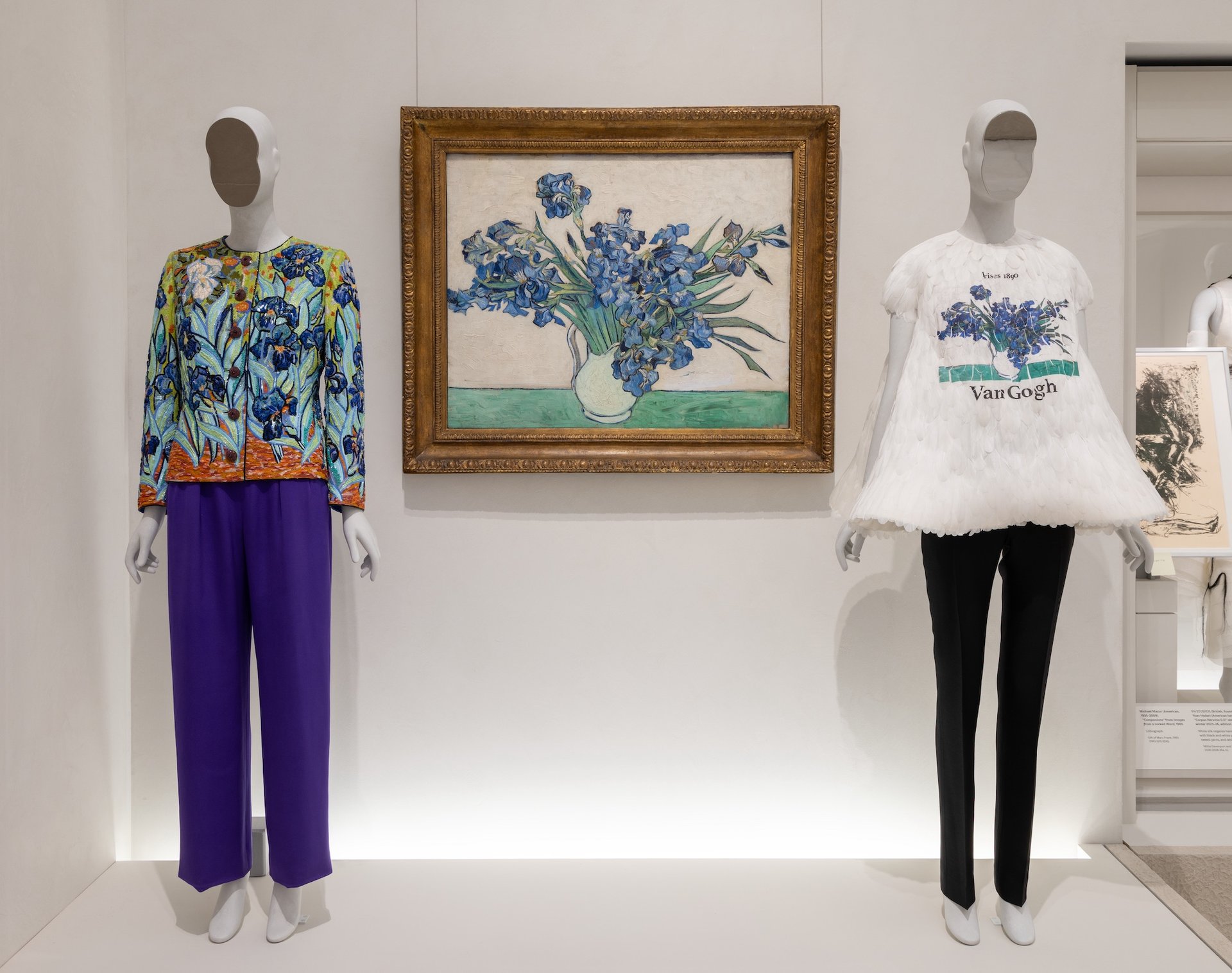
Installation view of the “Disabled Body” section of Costume Art at the Metropolitan Museum of Art (until 10 January 2027) Photo © Anna-Marie Kellen / The Metropolitan Museum of Art
Certain connections between dress and art in the exhibition feel more concrete or revelatory than others, but there is no question that the show marks a shift in cross-category curatorial engagement. Costume Art not only reflects how far the place of dress in art museums has come, but also how the visitor’s understanding of the relationship between fashion and art has evolved. For decades, extant garments have primarily been shown alongside art depicting similar styles, for example, in the Met’s seminal 2013 exhibition, Impressionism, Fashion, and Modernity. Costume Art, too, occasionally uses this approach, such as the pairing of a walking dress from around 1883 with Georges Seurat’s 1884 Study for “A Sunday on La Grande Jatte.”
While these literal pairings can be striking, the Met has progressively challenged audiences to think more deeply and critically about dress as a valuable communicator and lens through which other art forms can be viewed. And it is not the only institution moving the needle. Earlier this spring the Museum at FIT presented Art X Fashion, while the Frick Collection currently has two sartorial shows on view, Gainsborough: The Fashion of Portraiture(until 25 May) and Ruffles & Ribbons: Fashion Plates from the Time of Marie Antoinette (until 3 August). Perhaps, in another ten years, the question of “is fashion art?” will finally be put to the rest.
- Costume Art, until 10 January 2027, Metropolitan Museum of Art, New York
[ad_2]
Source link