[ad_1]
LIVING CULTURE
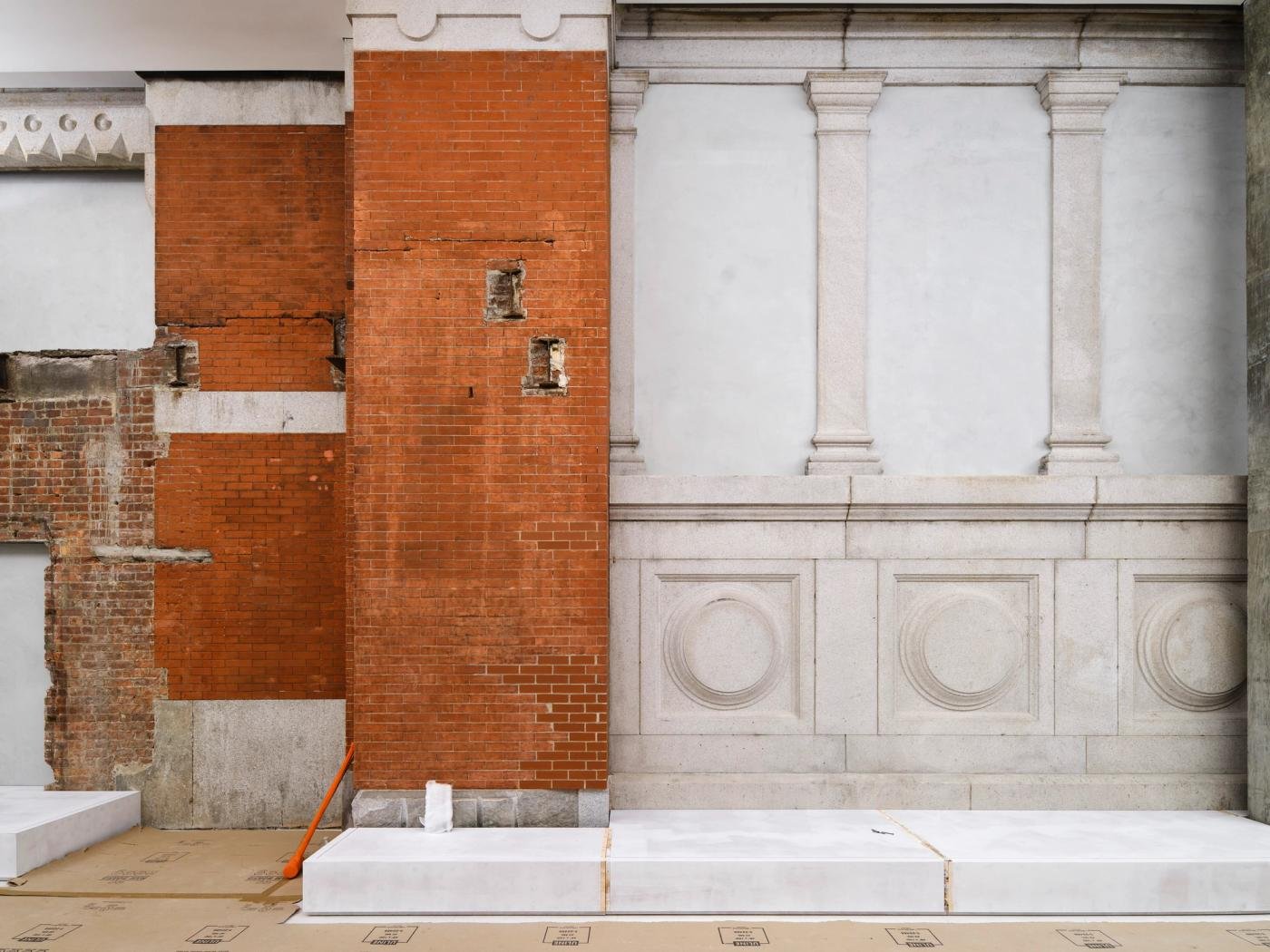
The Great Hall Gallery demonstrates that adaptive reuse is not about choosing between old and new, but about creating productive dialogue between them. The gallery deliberately exposes historic building components while creating exhibition spaces of clearly contemporary character between them, establishing a visual language of layered time that honors the museum’s past while serving its future.
Most significantly, by relocating the Costume Institute’s marquee annual exhibition to the front of the museum, immediately adjacent to the Great Hall and steps from the Fifth Avenue entrance, the project fundamentally repositions fashion and costume art within the Met’s spatial hierarchy. What was once displayed in lower-level galleries now occupies a prominent position alongside the institution’s foundational collections, affirming costume art’s status as central to the museum’s mission rather than peripheral to it.
This repositioning carries the democratizing impulse described at the outset. Fashion and costume, historically marginalized within fine art hierarchies, now stand alongside Egyptian antiquities, Greek sculpture, and Medieval masterworks. The architectural gesture argues that all forms of creative expression — past and present, fine and applied, revered and newly recognized — deserve to occupy the same cultural space.
Year after year, as exhibitions rotate and evolve, the gallery itself will remain unmistakably at The Met and of The Met — neither purely historic nor entirely contemporary, but rather a space that embodies both. This is architecture as living culture: dynamic, participatory, resistant to becoming static artifact. The building continues its story, inviting each generation to add new chapters while remaining legible as a coherent whole.
[ad_2]
Source link