
When asked about her art-making practice later in life, after her children had grown up and left home, the German artist Käthe Kollwitz replied: “I work like a cow grazes.”
She didn’t mean she was relaxed, content and experiencing a newfound creative liberty; she meant that her work was suffering from the absence of child-rearing demands. Time now stretched out and her art-making, similarly uncontained, had lost its urgency.
Having just shepherded my youngest daughter into adulthood, I, like Kollwitz, feel capable of little more than grazing – the accumulated exhaustion of 28 years of mothering is in my bones. I was much more creatively productive when my children were young and my writing needed to be crammed into the interstices of their lives.
Is there perhaps something elementally conducive to creativity in the nature of motherhood itself?
Mother is the collaborative effort of Sophie Gerhard, curator of Australian and First Nations art, and Katharina Prugger, curator of contemporary art, at the National Gallery of Victoria. Both have young children – Prugger is pregnant with her second – and it was through the shared experience of motherhood that they came together to delve into the NGV collection, as well make important acquisitions, for this exhibition of more than 200 works. Both are in the thick of early mothering and, when seeking a single word to describe their experience, they came up with “relentless”.
It’s a description most mothers recognise.
Mother opens with the presiding image of motherhood (and mother guilt) in western art and culture: the Virgin Mary. Intact and beyond reproach, she represents for many women the “first perfect mother”, against whom they can only fall short. But, beyond the occasional bared breast, we know barely anything about Mary’s actual experience of motherhood. I can’t help wondering if a different value system might operate in the western world had Mary been less an icon and more a thinking, breathing, living human being.
Gerhard and Prugger frame this disconnect: above the Madonna hang three woven birthing skirts by Elizabeth Djutarra, worn to protect the mother and child in labour, and attesting to the blood, sweat and mess of birth. Elsewhere, in Rosselli’s 15th-century Mother and Child with Three Angels the tempera is so eroded that mother and child are a barely visible outline – still faintly shimmering but also somehow empty.
Mother considers the erasure and invisibility of motherhood labour – whether performed by the mother herself or her paid proxy. Gerhard and Prugger include a strikingly confident sketch by Queen Victoria of her infant child Princess Victoria, plump cheeks obliterating the face of the nurse holding her, who presumably provided most of her mothering needs. A chain of 19th-century photographs display propped up and well-dressed infants. In the background, camouflaged, are the invisible mothers who hold them steady for the long exposures.
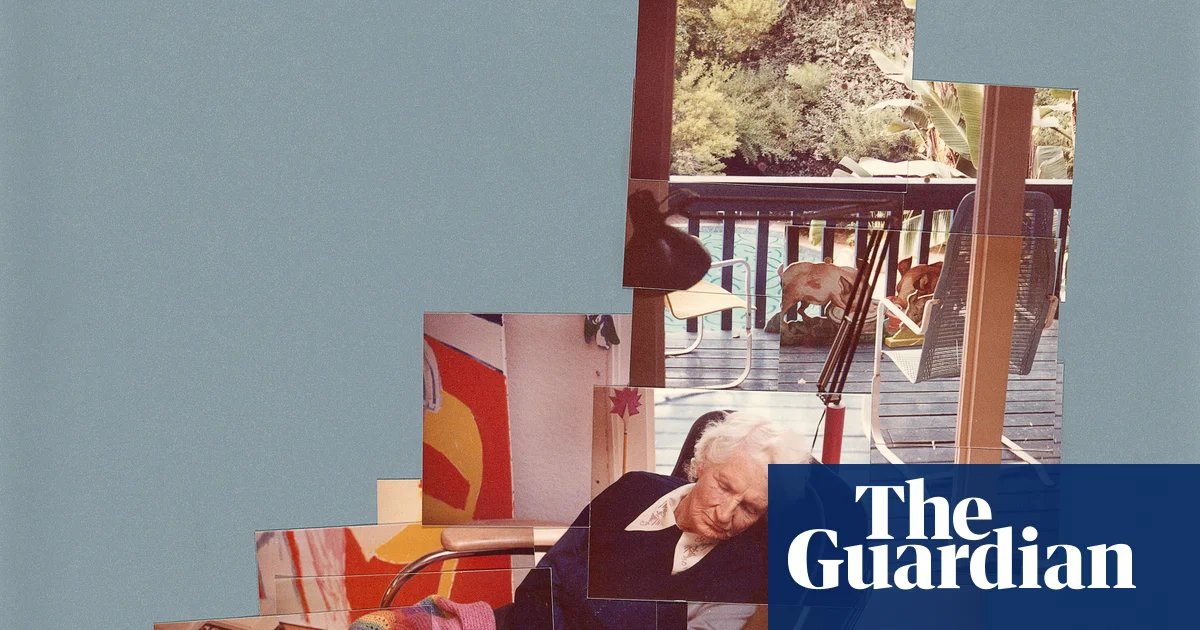
If there’s any thread to motherhood, across cultures and experiences, it might be crystallised in the word labour. This exhibition makes the many facets of this labour visible – from Christine Godden’s 1970s photographic documentation of the different phases of a home birth to Davida Allen’s Baby of 1989 in which it is not clear if the mother is reaching across the dinner table to feed or throttle her child. And, most indelibly for me, labour is present in the images of mothers at rest, sleeping entwined with their children’s limbs. I had forgotten the bliss and abandonment of maternal rest – rest made sweeter by the exhaustion that preceded it.
Motherhood may involve a good deal of rinse and repeat but this exhibition demonstrates that repetition is not the enemy of creativity. There are works here in which the repetitive tasks of mothering and the generational transmission of repetitive techniques are mirrored. Kate Just’s An Armour of Hope, created for her adopted two-year-old son, is knitted in metal and silk. Each stitch is a repetition of the one before but in totality they form a declaration of love and protection. The First Nations artist Kyra Mancktelow reclaims her maternal history in One Continuous String (2021), recreating, in traditional textiles, the dress her mother was compelled to wear at a mission in Moongalba.
In Dhatam (2023), Guruwuy Murrinyina re-envisions the detailed approach of her mother, Malaluba Gumana, in thousands of small linear gestures. Repetition – slow and patient, laborious and painstaking – is nevertheless accumulative. The many small stitches that make an article of clothing are synonymous with the many small stitches that make up a human being.
Gerhard and Prugger have divided Mother into three broad categories: creating, giving and leaving. There is loss here (a whole room given over to miscarriage and infant loss), joy (see Patricia Piccinini’s gleaming golden Nest, part-cow and calf, part-motorbike), and humour (Tala Madani’s image of a nursing mother squirting breast milk at a leering male). There is also maternal subterfuge in Queenie McKenzie’s Blackfellas in Bush Country (1987), which references her mother’s practice of rubbing charcoal into her face as a child to prevent her removal.
Leaving, the final section in the exhibition struck for me notes of loss and hope.
When my long-legged 18-year-old is tired or sick, she will climb into my bed as she did as a young child. But our bodies no longer have the same abandon with each other; we are less natural and slightly awkward. This is sad but necessary – and absolutely fine. The detachment and the interdependence that is also part of motherhood has, as it must, occurred. In motherhood’s cycle of depletion and renewal, repetition and accumulation, relinquishment (while never quite complete) is itself a creative act.