
[ad_1]
By Ella Edwards, The Seattle Medium
As the Northwest Folklife Festival prepares to return to Seattle on May 22, organizers are centering this year’s theme, Ubuntu, as a way to frame connection, community and shared cultural experience in one of Seattle’s most iconic events.
The Southern African philosophy, often translated as “I am because we are,” is shaping event programming, artist collaborations and public messaging, with organizers incorporating the theme into performances, community discussions and visual art throughout the event.
“Ubuntu speaks to the fundamental concepts of collaboration, acknowledgment and cooperation within the community,” Benjamin Hunter, artistic co-director of the festival, said in an email interview. “Ubuntu asks that we see humanity in all people.”
The annual festival brings artists, performers and community organizers together across the region. This year will mark the final installment in Folklife’s five-part Cultural Focus series, following Metamorphosis, Lagom, Meraki and Ikigai in previous years, Hunter said. He describes the series as a path towards Ubuntu, with each theme reflecting a different stage of human experience.
Metamorphosis acts as change and transition, while the Swedish concept Lagom represents balance in a changing landscape, the Greek concept Meraki reflects hope and aspiration, and the Japanese concept Ikigai emphasizes purpose and conviction. Ubuntu, he said, brings those ideas together with a focus on connection and shared humanity.
Hunter said the festival’s broader goal is to continue expanding public ideas about what “folk” culture includes in Seattle.
“Folklife isn’t mere entertainment,” Hunter said. “Folklife is a reflection of the things that people do every day that shape their identity, their community, their heritage, their passion and their creativity. Folk is people. Full stop.”
Hunter said the philosophy of Ubuntu has long existed within Folklife’s structure through “multicultural, intergenerational and emergent forms of art.”
“This five-part series offers us a framework to accept human nature and recognize that there is a pathway to find our common humanity again,” Hunter said.
Among this year’s featured programs are the Community Foodways Kitchen, a space for food demonstrations and conversations about land sovereignty and community health, and the Ubuntu Summit, a convening focused on how festivals can support placemaking and cultural connection. Both were developed in collaboration with the Smithsonian Folklife Festival, the Smithsonian Institution’s program that presents living culture traditions through public festivals. Hunter said the foodways program will bring together communities working on related issues, while the summit will examine the role festivals can play in cultural expression.
Artists participating in the festival said Ubuntu also shapes how they are approaching storytelling and visual art.
Saloni Singh, a narrative storyteller performing at the festival for the first time, tells personal stories aloud for live audiences, using voice and expression to turn private experiences into shared performance. Singh said storytelling naturally connects to Ubuntu because it allows people to see shared experiences in one another.
“Storytelling was always meant to be communal,” Singh said in a Zoom interview. “The goal is never look at me. The goal is, have you felt this too?”
Singh said festivals like Folklife create spaces where audiences and performers can connect across different backgrounds and experiences.
“When you get on stage and you tell something you thought only happened to you, it’s so nice to see so many people walk up to you and say, ‘I felt seen, I felt heard,’” Singh said.
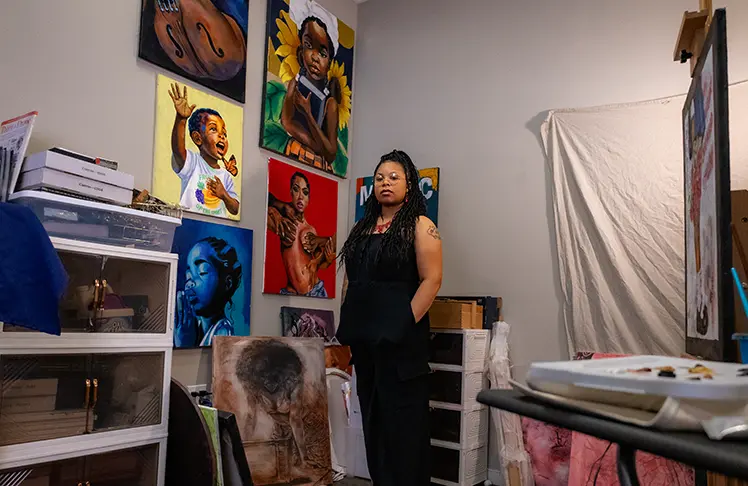
In a phone interview, visual artist Charde’ Brown said her work uses acrylic paint, mixed media and color, and often focuses on Black youth, emotional experience, and themes of connection and shared humanity.
“I would want them to feel like they’re being invited to something bigger,” Brown said of people encountering her work. “I hope that it reminds people that even though we all come from different backgrounds and experiences, there’s a beauty in gathering and learning from one another’s experiences in life and recognizing that we are in a shared humanity.”
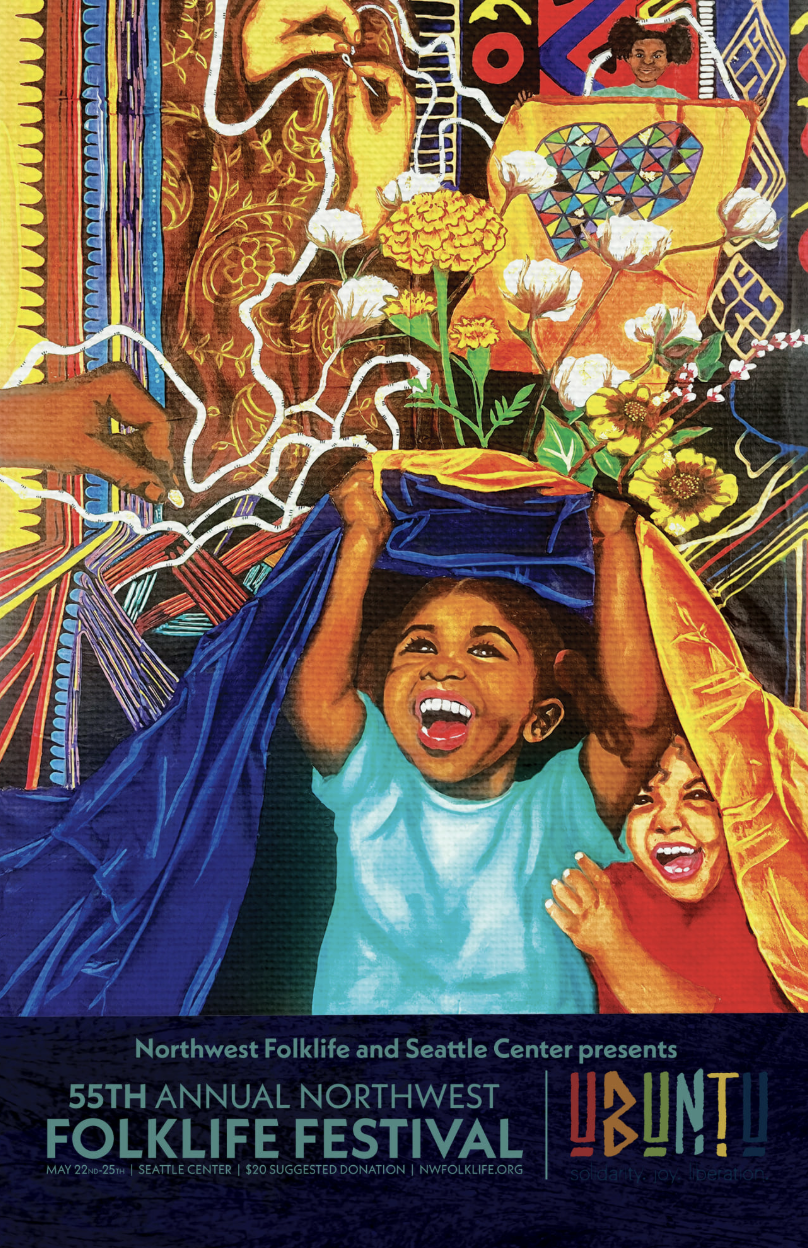
Brown, who collaborated with two other artists to create the festival poster, said the creative process itself reflected the Ubuntu theme because each artist contributed different perspectives to a shared project. The poster features children lifting a cloth overhead amid bright flowers, colors and layered geometric designs.
The 2026 Northwest Folklife Festival is scheduled May 22–25 at Seattle Center. Organizers hope the theme will encourage attendees to approach the event with openness toward one another.
“We hope Ubuntu motivates people to connect and reconnect, with themselves, with each other and with the possibility of something better,” Hunter said.
[ad_2]
Source link