
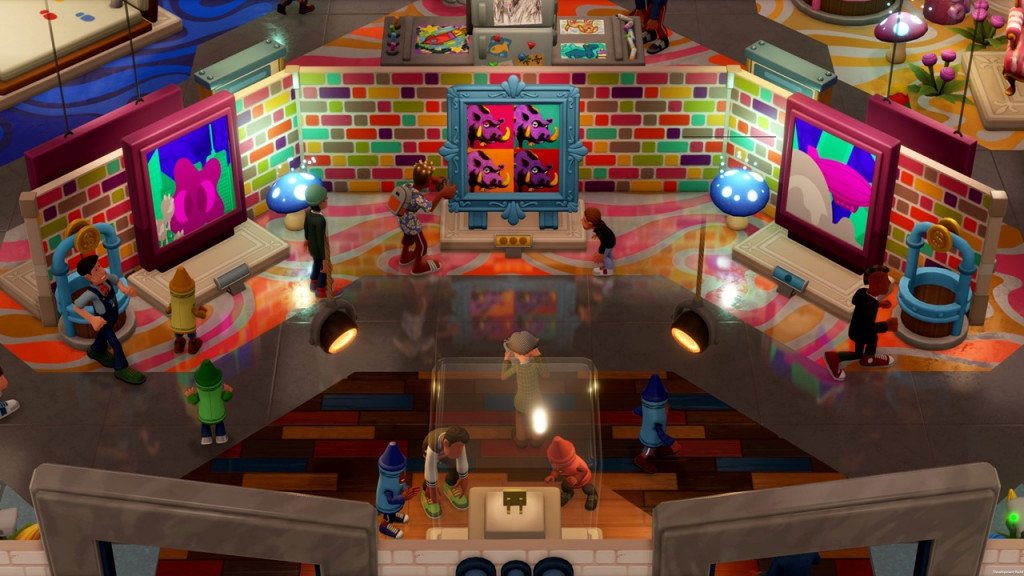
Two Point Museum’s Arty-Facts expansion turns the game’s museum formula in a noticeably different direction. Instead of treating the museum as a place that only displays relics, it adds a system that lets the collection become part of the creative process itself.
The expansion shifts the setting into Undee Docks, a decaying industrial port that now serves as the backdrop for an art museum. The location is defined by rust, rough surfaces, and graffiti, creating a sharp contrast with the ambition to build something that feels like a modern gallery.
A museum built inside a rough industrial shell
Undee Docks gives the expansion its strongest visual identity. The area is described as harsh and worn down, which makes every design choice inside the museum feel more deliberate.
That contrast is central to the appeal. Players are asked to shape a space that mixes an old warehouse feel with a contemporary gallery atmosphere, and that tension makes the layout more challenging than a standard museum build.
Art Studio changes how collections are made
The biggest addition is the Art Studio, a facility that allows the museum to produce original artworks. This means the collection no longer depends only on artifacts gathered through expeditions.
The studio can generate more than 250 million combinations of paintings, portraits, and sculptures. The developers also state that every asset was made manually by real artists, with no artificial intelligence involved.
To run the studio, the expansion introduces a new staff role called the Art Expert. These staff members curate art and create works, while their personality and traits influence the final output.
That system creates visible variety. Some staff may only manage stick-figure drawings, while others are better suited to abstract styles.
Emotions become part of the gameplay
Arty-Facts also adds an Emotional Aura mechanic that gives each artwork a specific mood. Works created in the studio or discovered on expeditions can carry Joy, Rage, Romance, or Sorrow.
Art Experts need training before they can produce the right emotional effect consistently. That makes the system more than cosmetic, because the emotional tone of each piece affects how visitors behave.
The effects are practical and specific. Rage-themed art can encourage impulse spending near the Gift Shop, Romance can make guests more careful about cleanliness, and Joy can help increase donations.
Expeditions bring in playful art references
Players can also head out on Zara’s Sketchbook, an expedition map shaped like a sketchbook. It serves as a route to discover inspiration and find Famous Works.
Some of those works parody well-known real-world art. Two Point Gothic is a nod to American Gothic, while The Stinker plays on The Thinker and can release green gas when its finger is pulled.
That kind of humor keeps the expansion aligned with the series’ satirical style. The museum collection feels more playful because it mixes classic art references with absurd comedy.
More displays, more activity, more pressure
The expansion is not limited to art production and expedition content. It also adds five Interactive Displays, including pantomime performances and fragments of Shakespearean drama.
These additions help keep large museums active and can reduce long queues. As the museum grows busier, they give players more tools to manage visitor flow.
At the same time, the new systems increase complexity. Training staff for Emotional Intelligence can take time and may feel confusing, especially for players aiming for Pristine or Epic artwork quality.
That quality depends on famous artworks already present in the museum as references. As a result, collection management, staff training, and artwork placement all have to work together.
A more personal kind of museum
The expansion’s strongest change is the sense of ownership it gives the player. The museum is no longer only a storage space for found objects.
Because artworks can be produced internally, the museum develops a more personal identity. Players shape that identity through staff choices, emotional effects, and the pieces displayed across the galleries.
Source: www.medcom.id
